I knew absolutely nothing about Melaka before we landed there. Truly nothing. It appeared on our itinerary thanks to a Malaysian friend’s aunt, ChatGPT, and a handful of travel blogs. I hadn’t even heard of it, let alone formed an opinion.
And yet — here we are. In Melaka.
We landed in Kuala Lumpur in the early evening, but by the time we walked what felt like a kilometre from our plane to the Arrivals hall, cleared customs and immigration, collected our bags, located our driver, and finally escaped the terminal… it was definitely evening.
First observation: KLIA is a HUGE airport. The arms stretching out to the gates are astonishingly long. The skybridge alone — connecting the satellite terminal to the main building — is 300 metres. Three hundred. And somehow that feels short compared to the rest of the trek. I’m fairly certain we hit our 10,000 steps before even reaching baggage claim.
But the airport marathon was quickly forgotten once our driver merged onto the expressway and began driving as though his Formula 1 debut was imminent.
When the speedometer hit 160 km/h, I turned to Gary and announced — perhaps louder than intended — “OMG WE’RE GOING TO DIE!!”
This seemed to momentarily interrupt our driver’s racing fantasies. For a minute or two, at least.
Then I made the tactical error of videoing the speedometer. He noticed. He became anxious. He checked the rear-view mirror repeatedly. But to his credit, he reduced our speed to a far more reasonable 140–150 km/h.
So… much better?
Perhaps, our speed was perfectly normal for that expressway. But after a month in Sri Lanka, where 70–80 km/h felt daring and 50–60 was standard, this sudden BURST of velocity was… jarring.
The fact that our driver looked mildly drowsy did not enhance my sense of calm.
For the full 90-minute drive to Melaka, I barely took my eyes off him — or the speedometer. When we finally exited the freeway and were forced to slow down, I rediscovered oxygen.
We arrived alive.
We’re staying in an apartment at The Shore Hotel & Residences, just on the edge of Melaka’s old town and overlooking the winding Melaka River - and I was very ready to be somewhere stationary. We’ve got five nights here, time to unpack, do laundry, workout, relax a bit plus plenty of time to wander the city.
Our first adventure was a food tour. This was when my eyes were opened to the wonderful mosaic of cultures, religions, languages and foods that makes Melaka so unique.
But first I should give you some background on this remarkably diverse city. It’s both interesting and will help you understand why Melaka is known as a “mosaic”. If you feel this type of history should remain in the past, please skip ahead.
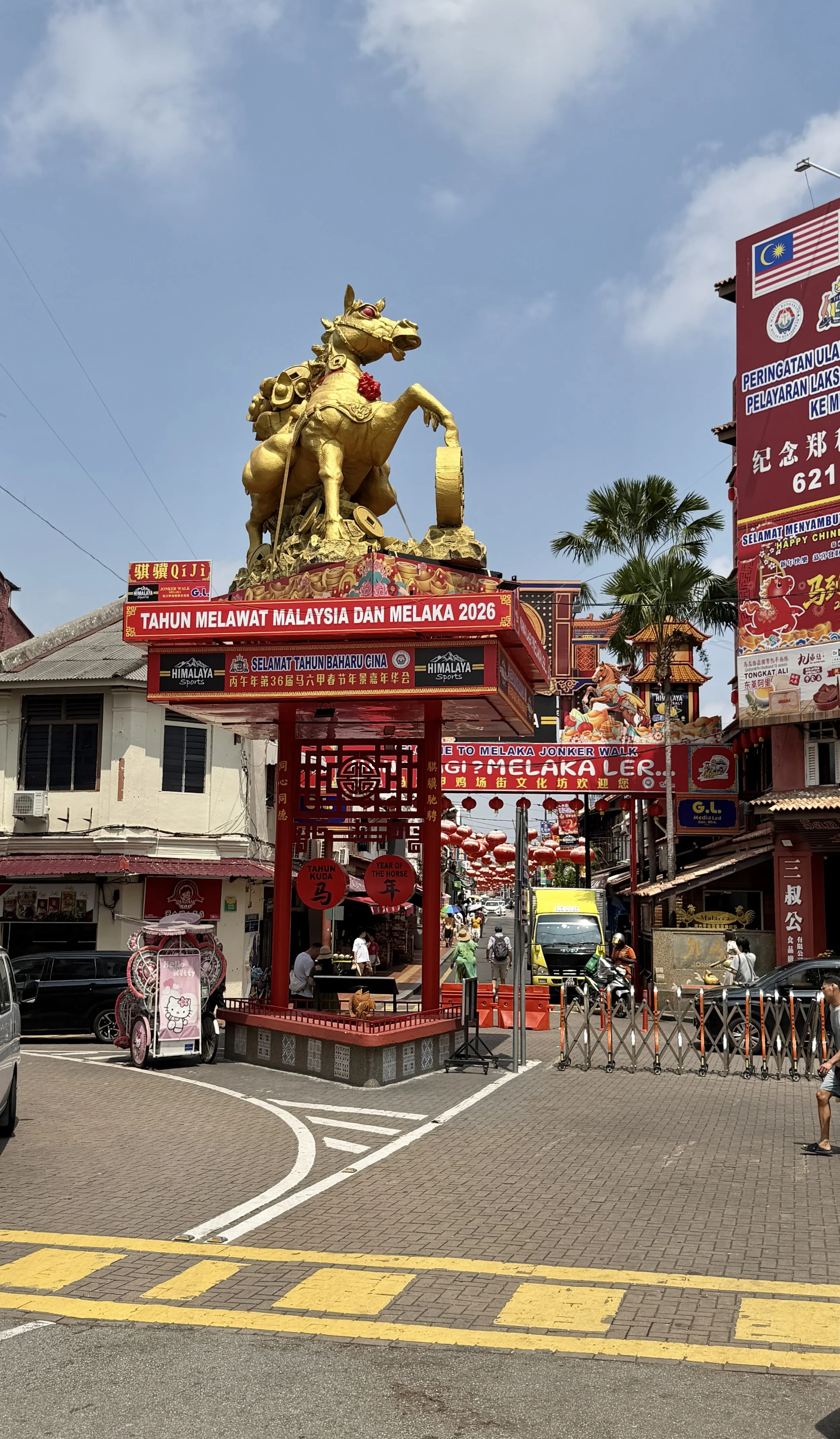
Malaysia is one of the most culturally layered countries in Southeast Asia — and you feel it immediately. Mosques, Hindu temples, Chinese clan houses, and churches often sit within blocks of each other. The mix shapes everything: food, dress, public holidays, politics, and even how cities feel from one neighbourhood to the next. And Melaka one of the best examples of this layering.
There is a wonderful story about how Melaka came to be. Here’s the quick version:
The Mouse Deer, the Dogs, and the Birth of Melaka
Long before colonial forts and trishaws with disco lights, there was a fleeing Sumatran prince.
That prince was Parameswara, a Hindu ruler from Palembang (in Sumatra) who had been ousted from his kingdom in the late 1300s. He fled across the sea, eventually landing on the Malay Peninsula.
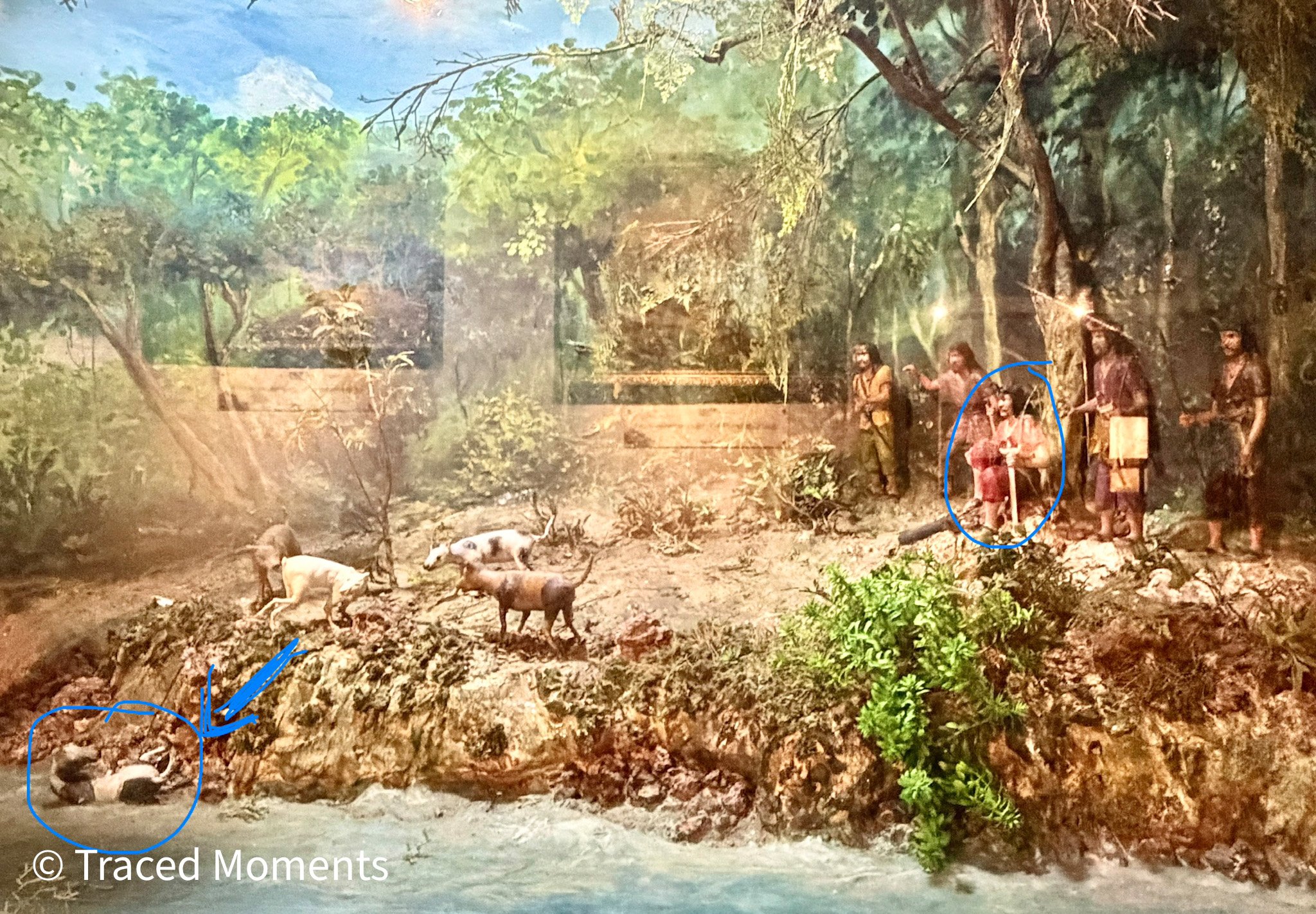
One day, while out hunting near a river, he stopped to rest beneath a melaka tree (a type of Indian gooseberry tree). His hunting dogs flushed out a tiny mouse deer — a small, delicate-looking animal.
The dogs cornered it near the riverbank.
Instead of running…
The mouse deer turned around and kicked one of the dogs into the river.
Tiny deer. Big attitude.
Parameswara was stunned. (The dog was undoubtedly embarrassed!)
He took this as a sign:
If such a small creature could defeat powerful dogs here, then this must be a place of great strength and destiny.
So he decided to found a settlement right there.
He named it Melaka, after the tree under which he had been sitting.
Good branding, right?
Not long after, Parameswara converts from Hinduism to Islam — likely a strategic move to strengthen ties with Muslim traders — and Melaka is transformed into a powerful Sultanate. Arab, Gujarati, Chinese, Javanese, and Malay merchants poured in. Spices, tin, textiles, and maritime tolls fill the coffers.
By the early 1500s, Melaka isn’t just a port. It’s the commercial and cultural heart of the Malay world — a glittering mosaic of languages, faiths, ships, and ambition.
And mosaics, as history shows, attract conquerors.
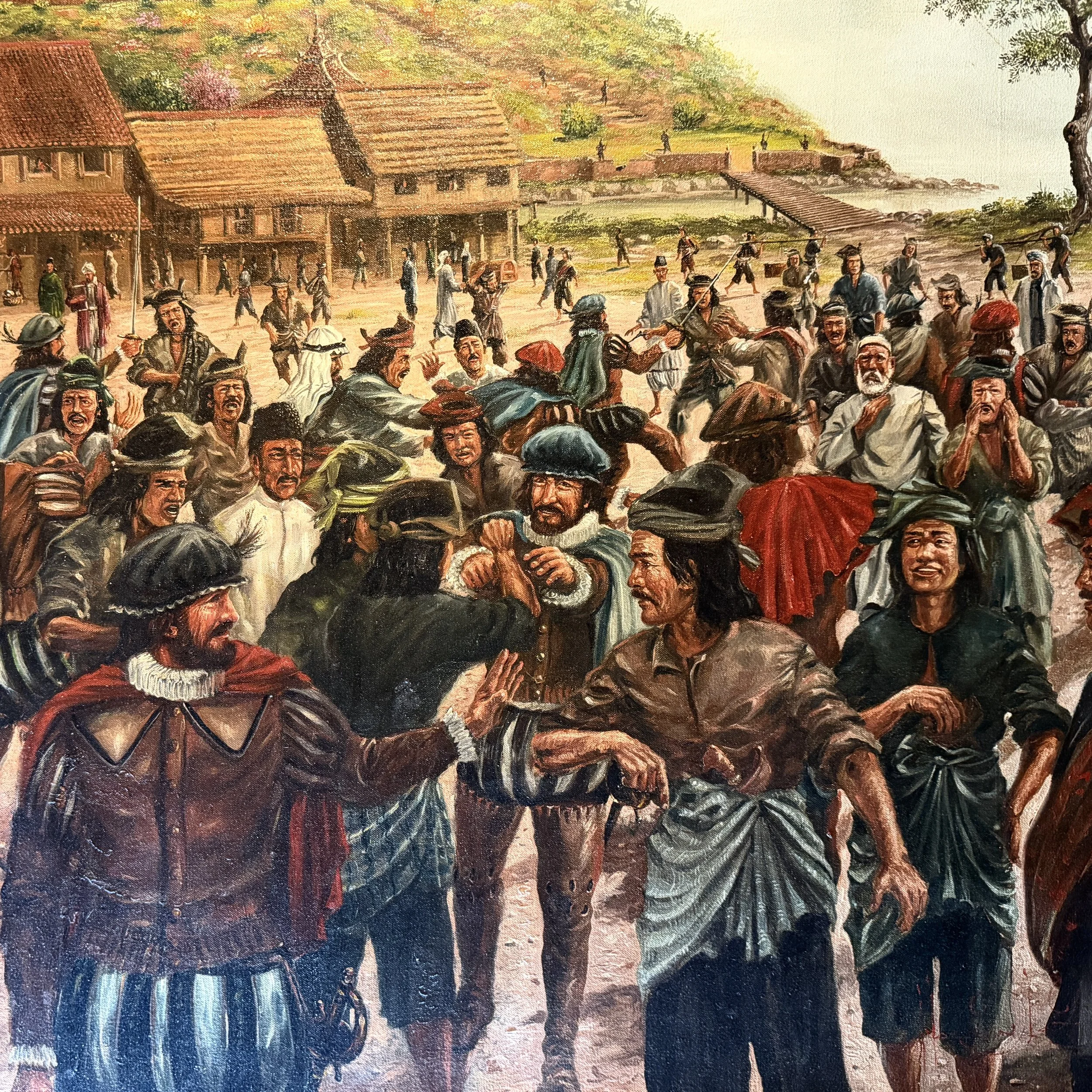
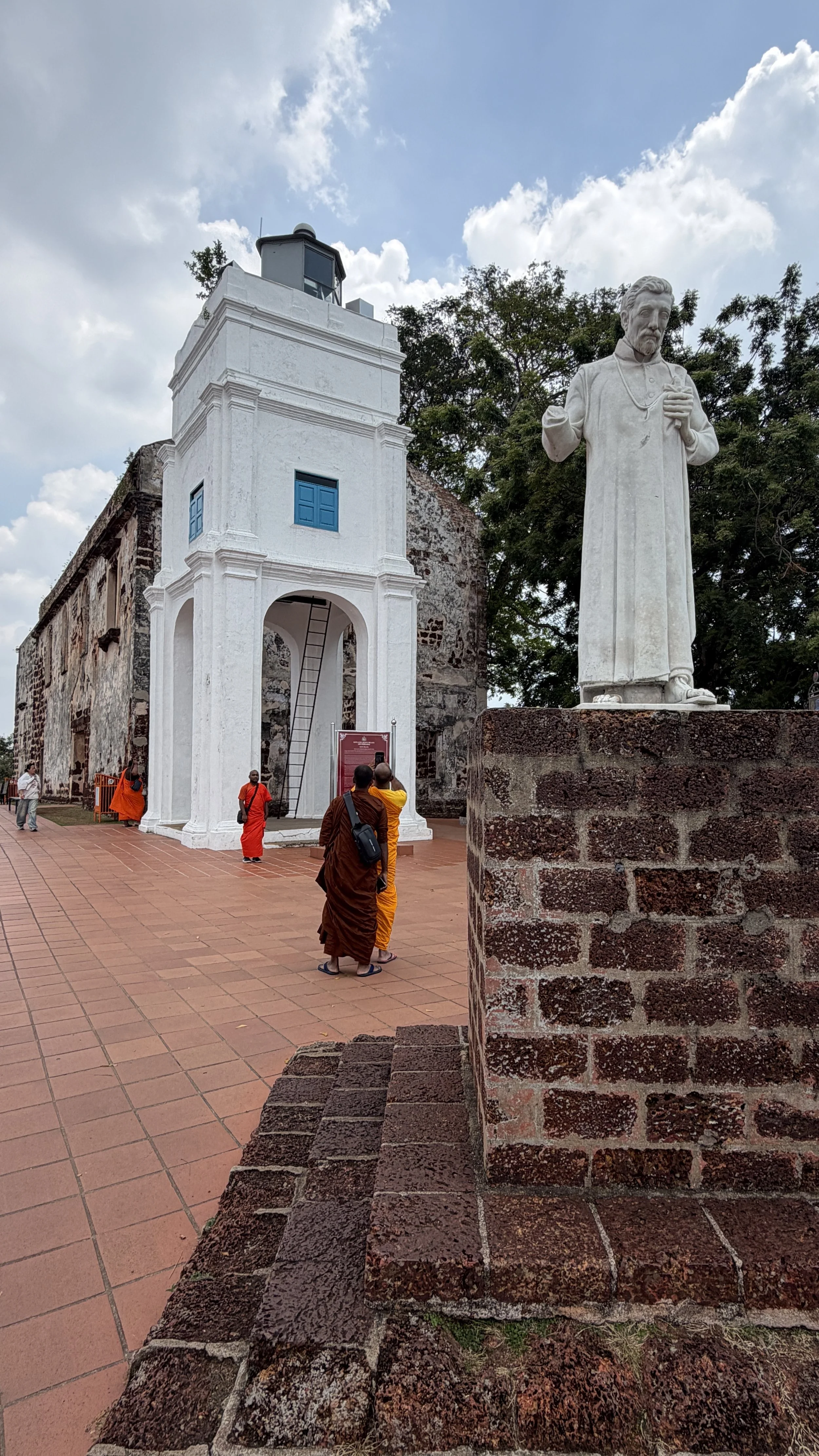
The Portuguese arrive first, seizing the city in 1511 with violence and little regard for those already living there. More tiles shift. More layers are forced into place.
The Dutch follow, partnering with local Malays to drive the Portuguese out. Control changes hands again. The tone softens, but the pattern continues — another colour laid over the last.
Then the British arrive, adding yet another layer to Melaka’s evolving design — one that still shapes the streets you walk today.
Finally, in 1957, the Federation of Malaya — including Melaka — gains independence from Britain and renames itself “Malaysia”.
Which brings us to today.
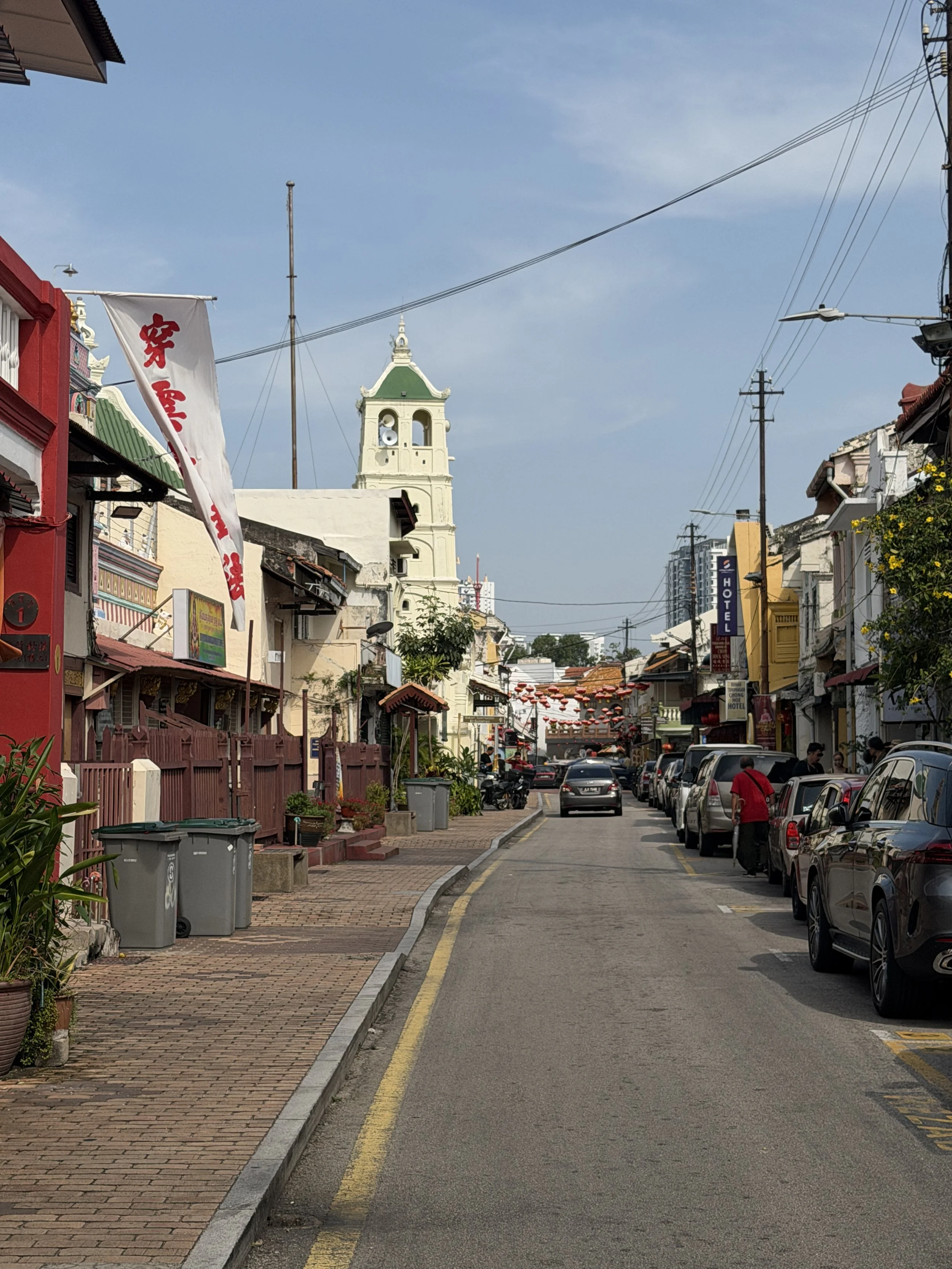
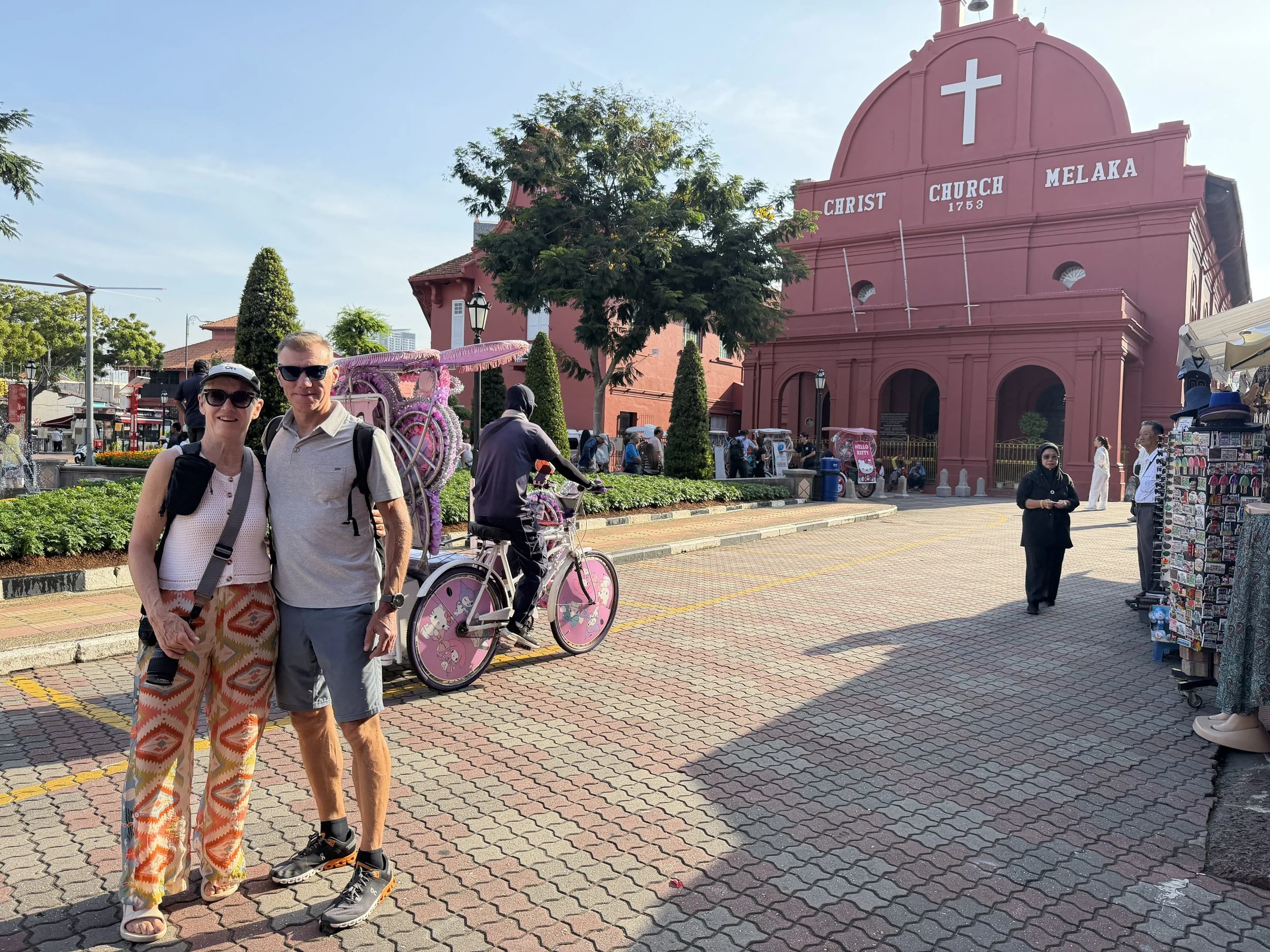
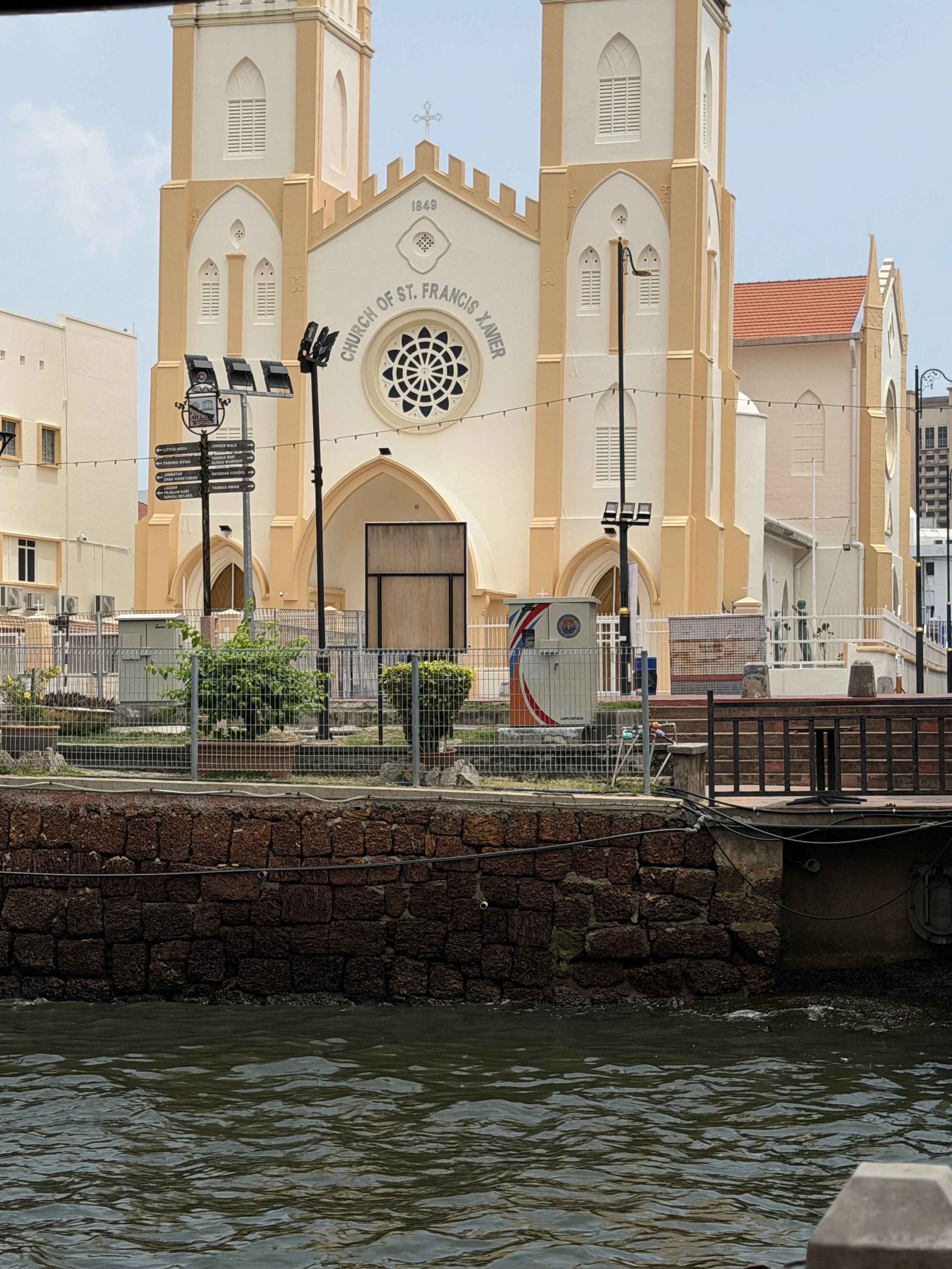
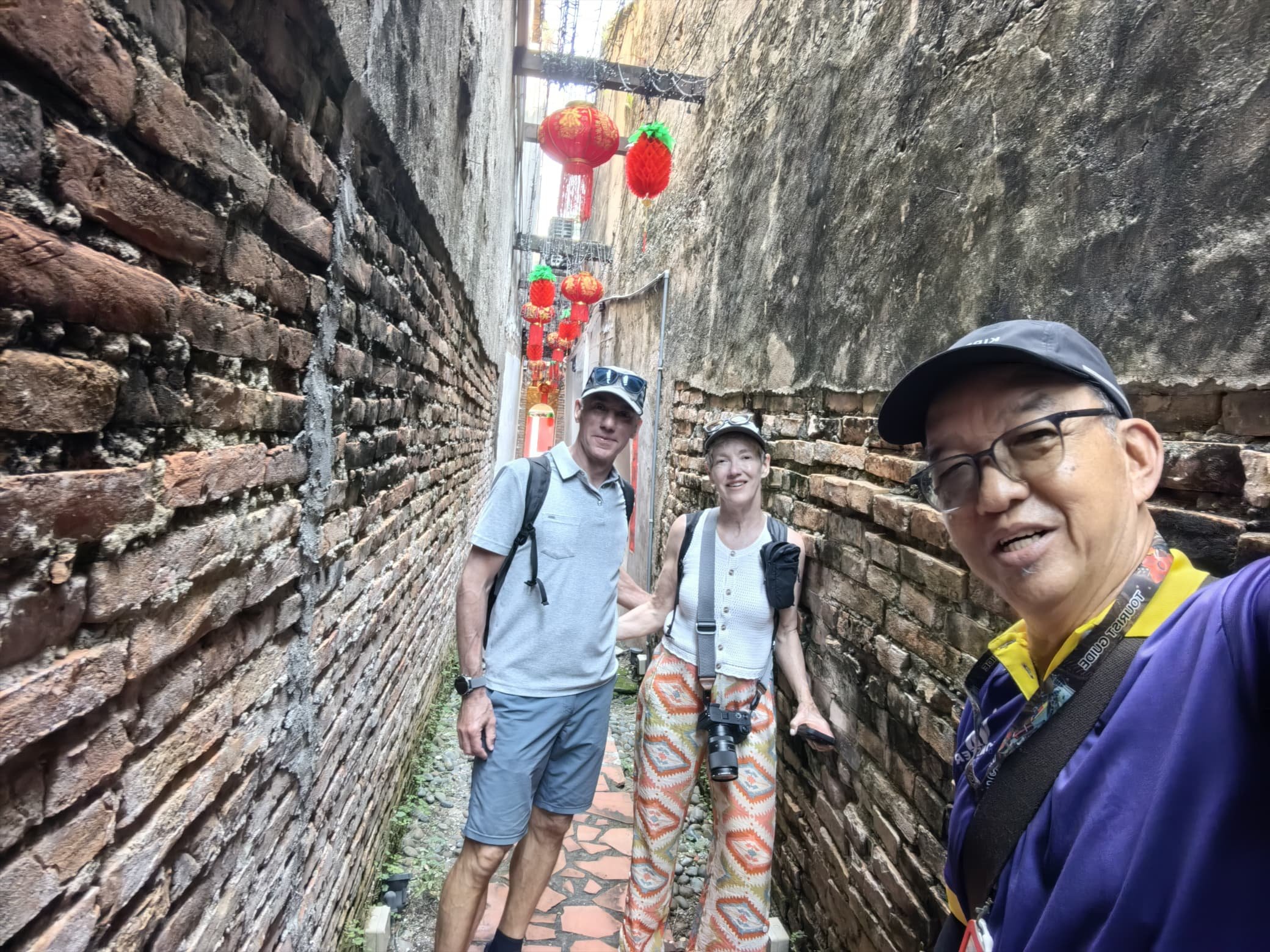
Gary and I are standing on a quiet side street in the old quarter with our food tour guide, John Choon. Within a single block sit a Chinese clan house/temple, a mosque, a Hindu temple, and a Catholic church. They are ALL very old.
Given Melaka’s mix of Malay, Chinese, Indian (mostly Tamil), and Eurasian (largely Portuguese-descended) communities, this shouldn’t surprise.
And yet it does.
Pause for a moment.
All these faiths.
Sharing space.
Sharing history.
Peacefully (well, the
people have mostly been peaceful, the governments/rulers, not always)
For centuries.
Now, back to the food — because in Melaka, history isn’t just preserved… it’s simmered, juiced, steamed and poured.
The cuisine, like the city itself, is a glorious mash-up of Malay, Chinese, Indian, and colonial influences. Even the “traditional” dishes are the delicious result of centuries of cultural cross-pollination.
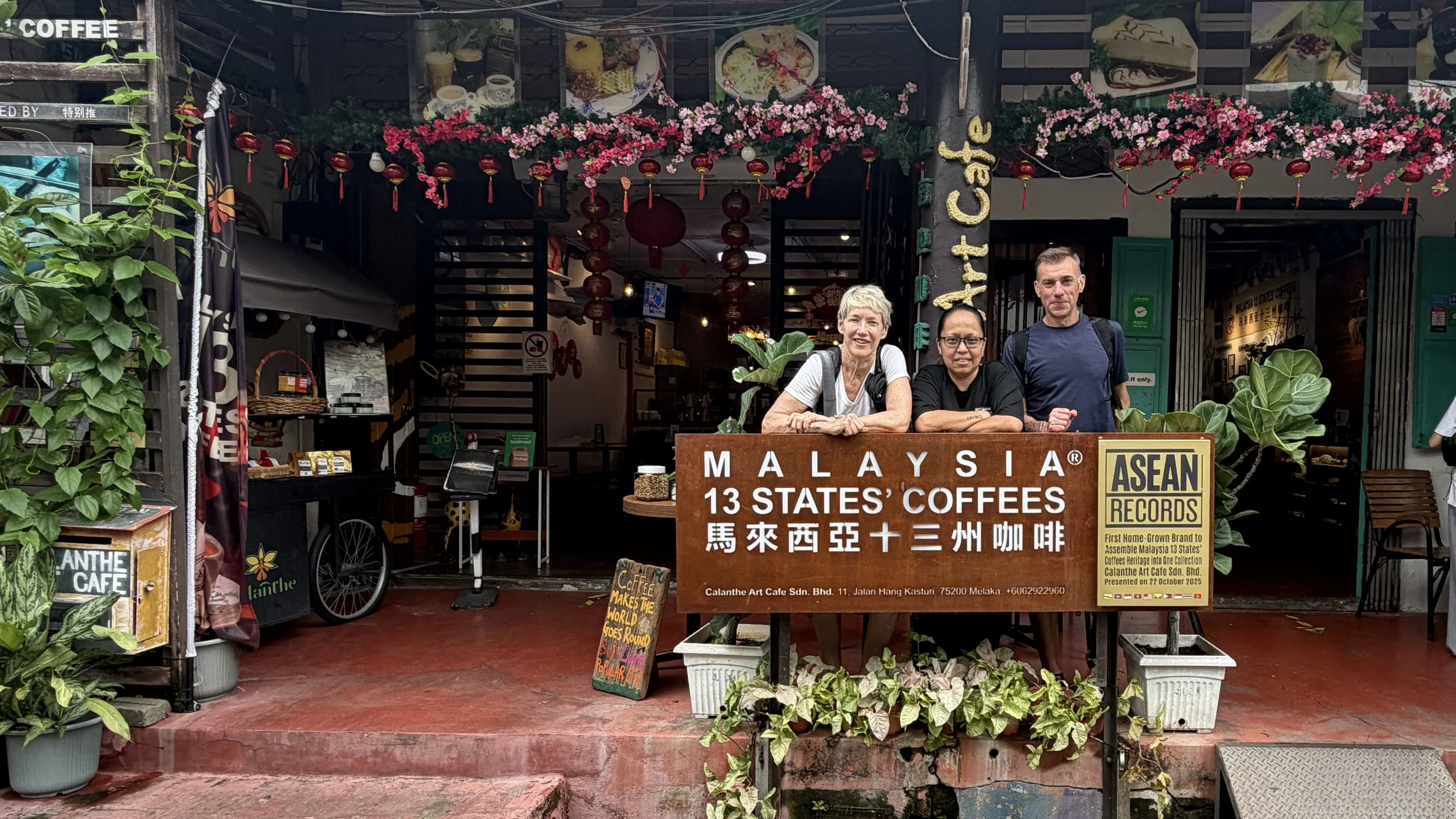
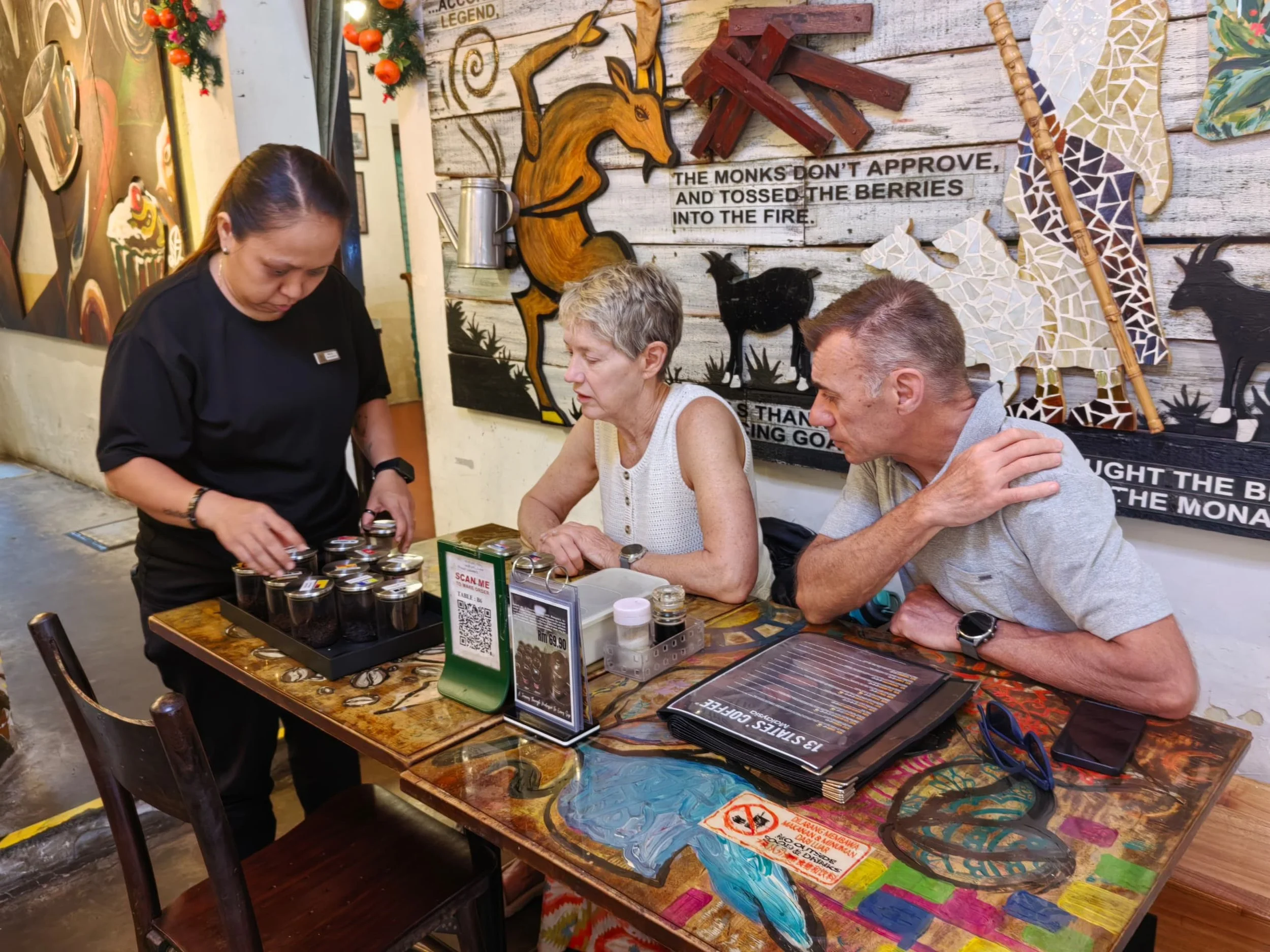
We begin with coffee — or Java — fitting, since we’re practically next door to the island of the same name. At Calanthe Art Cafe, part art gallery, part coffee sanctuary, John arranges a tasting featuring beans from all 13 Malaysian coffee regions. Gary is in absolute heaven. There is a real possibility we may need to pry him out of here.
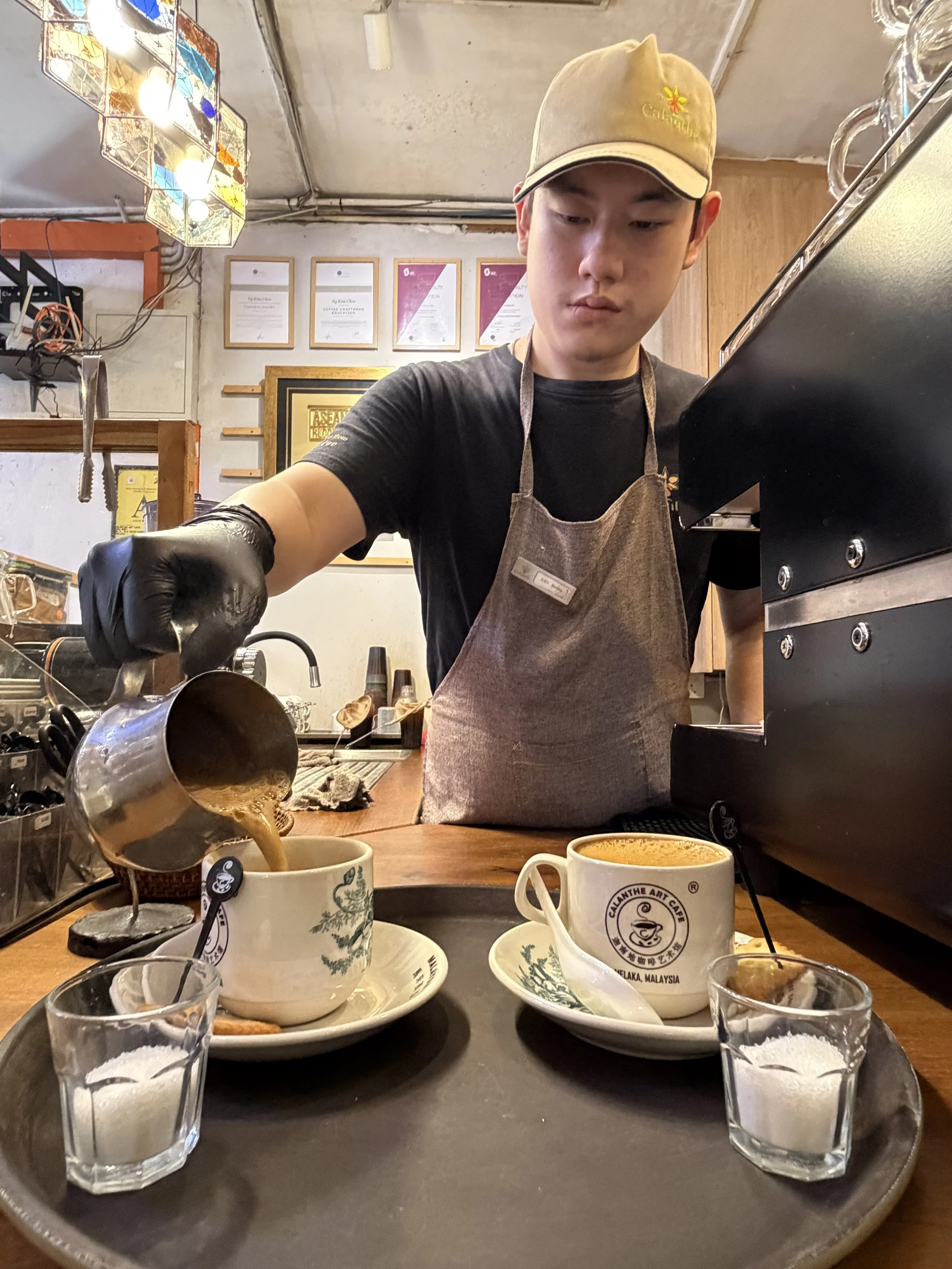
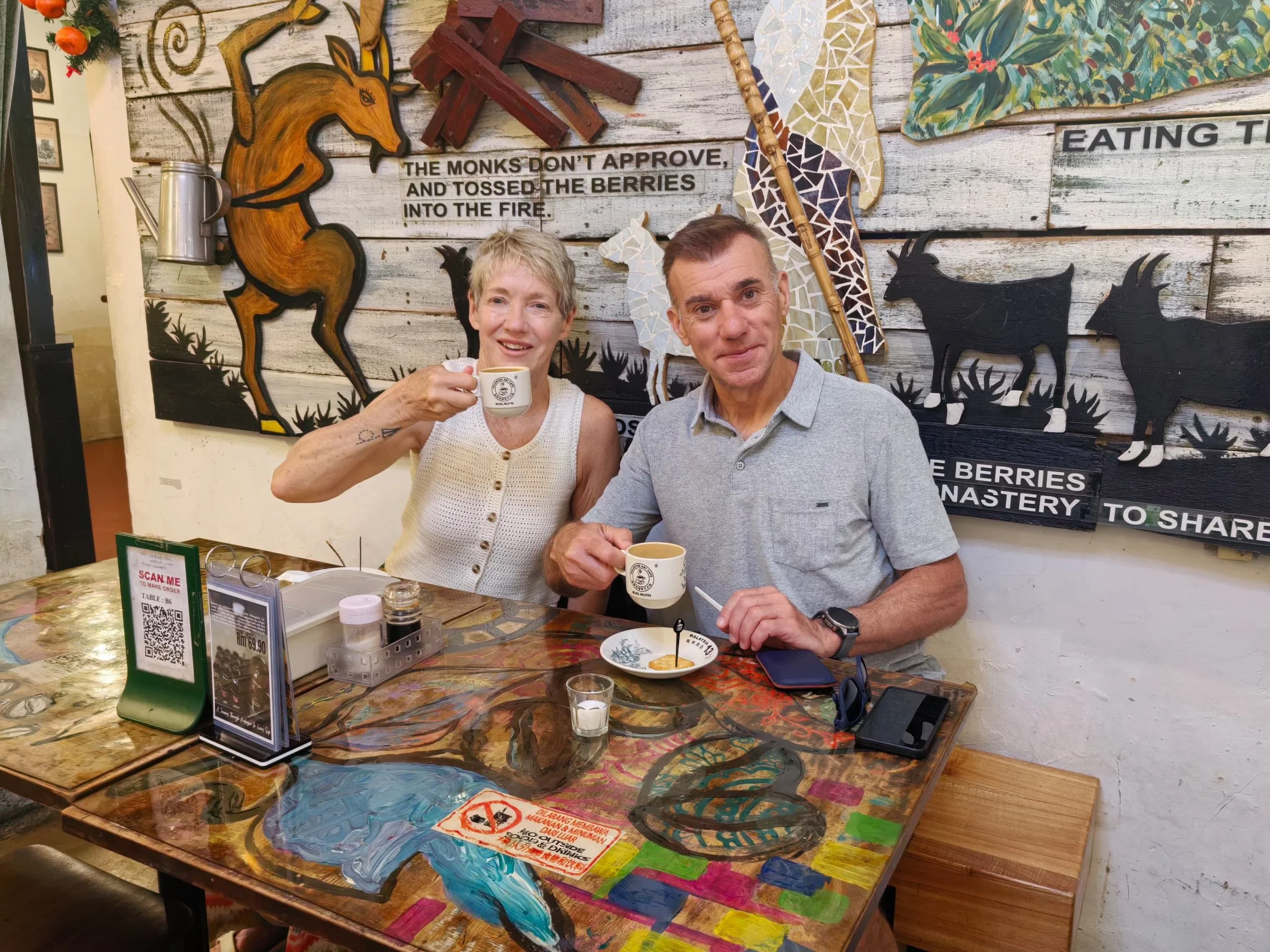
We sniff. We sip. We debate light, medium, and strong like seasoned sommeliers. Each of us chooses a favourite, and the barista brews it “Java style.” It’s rich, earthy, and dangerously good. We return twice more over the next three days. Strictly for research, of course.
We pair our caffeine with Chee Cheong Fun Laksa — a Melaka specialty that defies tidy description. Think silky rice rolls swimming in a coconut-laced, gently spicy chicken broth. It is wildly, unfairly good.
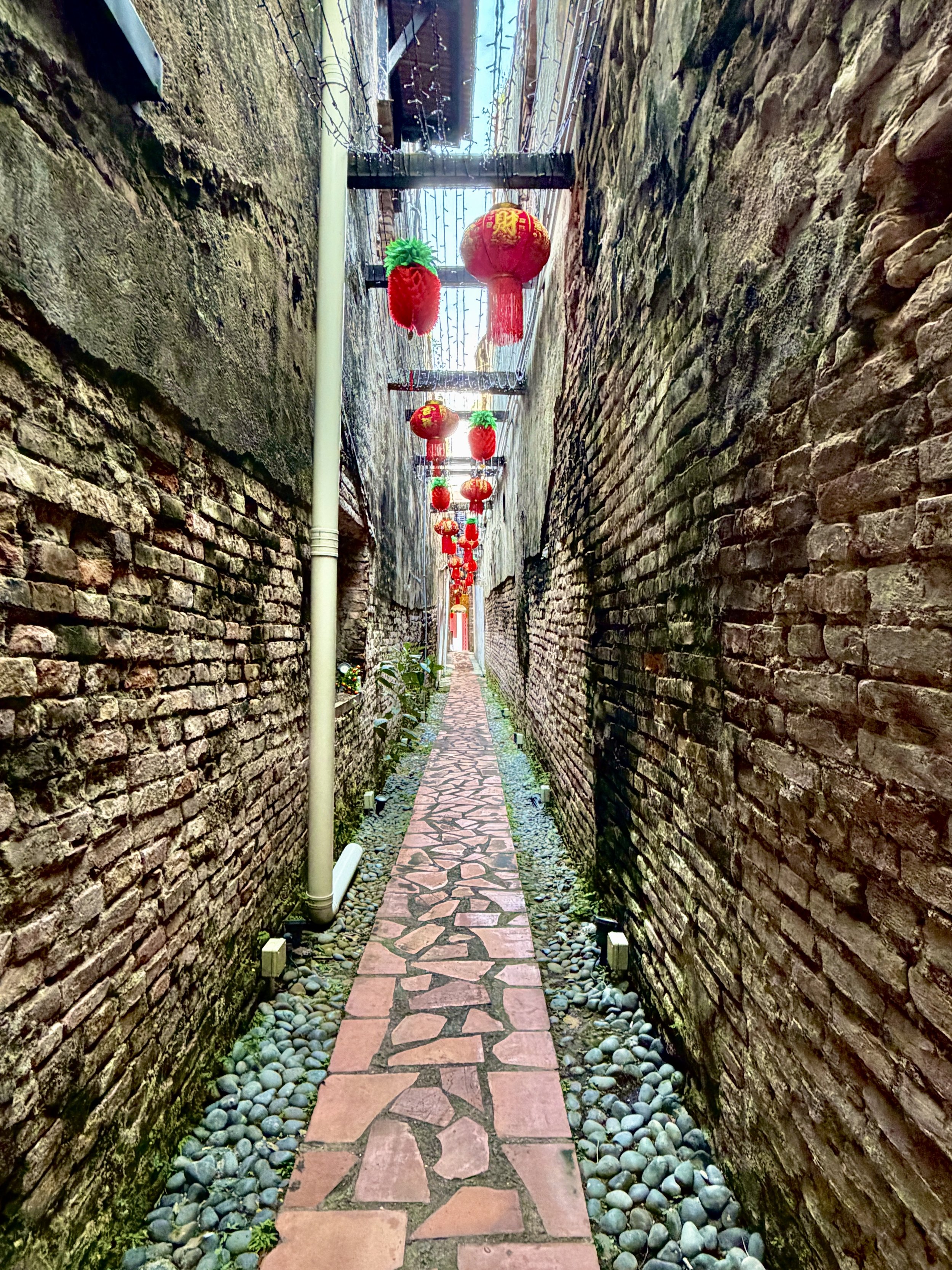
Properly caffeinated, we wander the old town’s mural-splashed lanes. The alleys run between those famously long, narrow shophouses — built skinny at the front thanks to colonial tax laws that charged by street width. Nothing like a good tax loophole to shape urban design. Homes that are only 4-6 meters wide at the front, stretch between 30 and 60 meters in depth, complete with hidden courtyards and air wells that pull in light and breeze. Tropical climate meets accounting strategy, and a snub to the taxman.
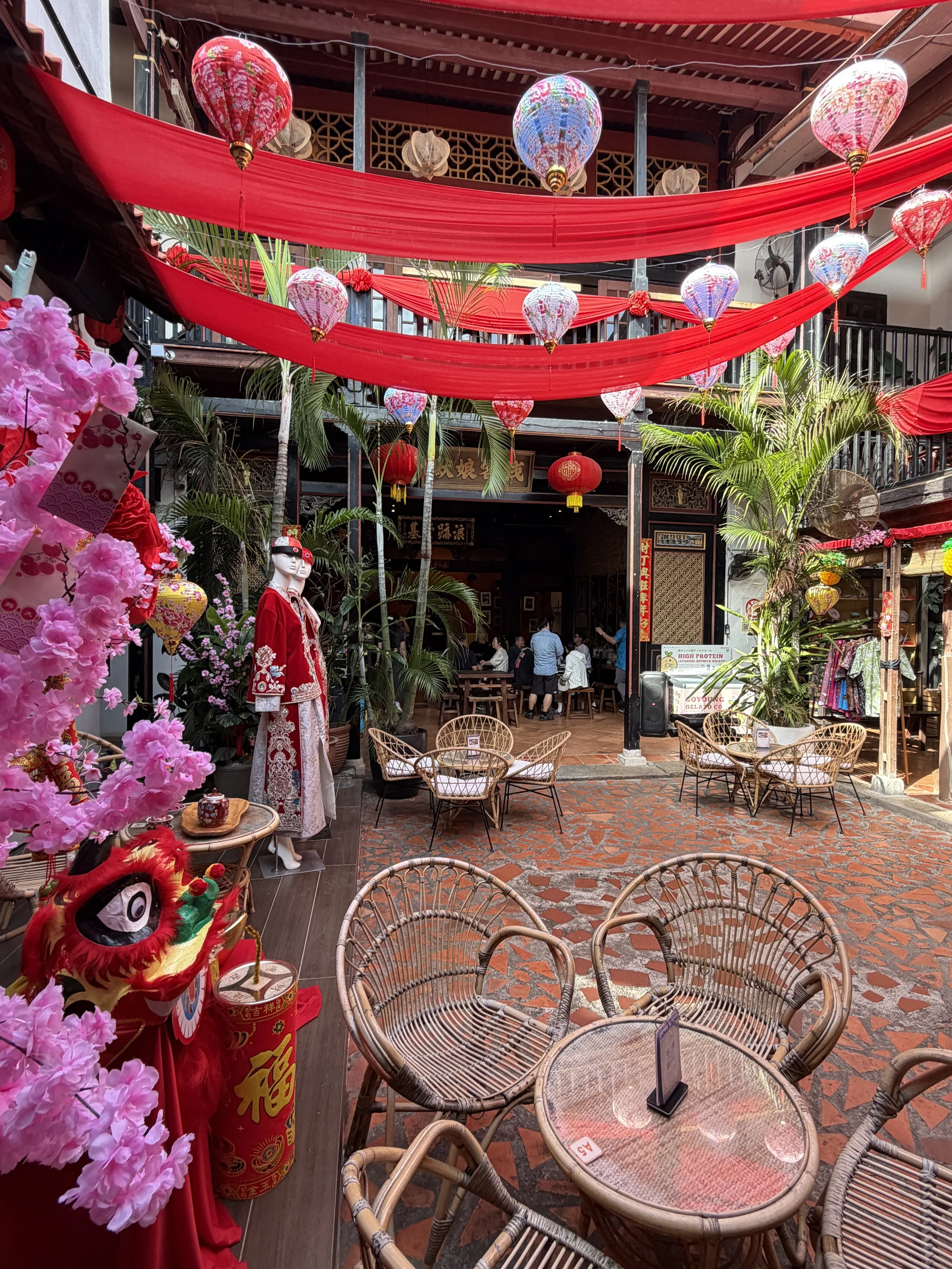
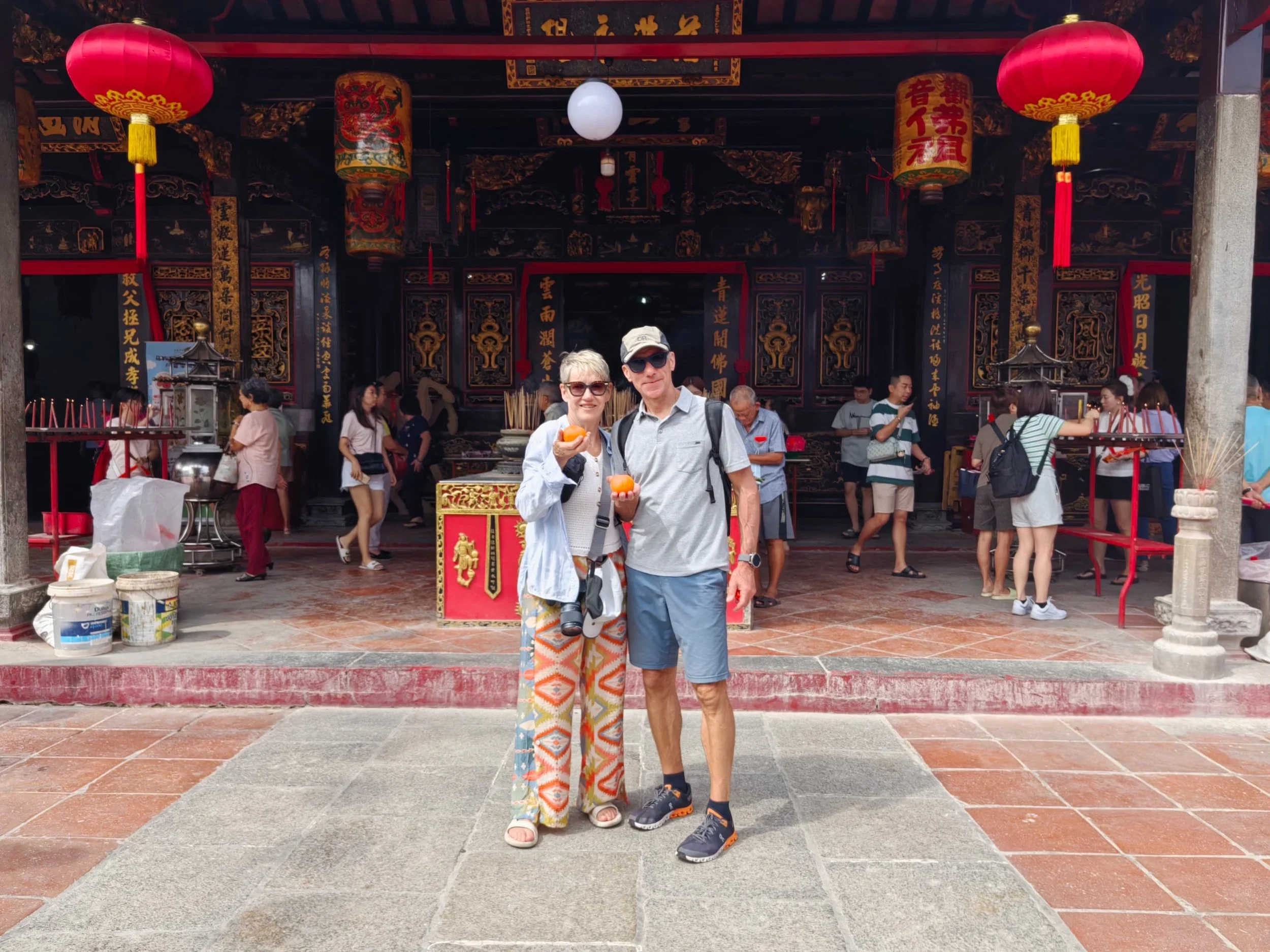
We stop at temples – Chinese and Hindu, a mosque, and a church — layers of faith living on the same block — and between history lessons we do what we do best: eat.
Highlights include:
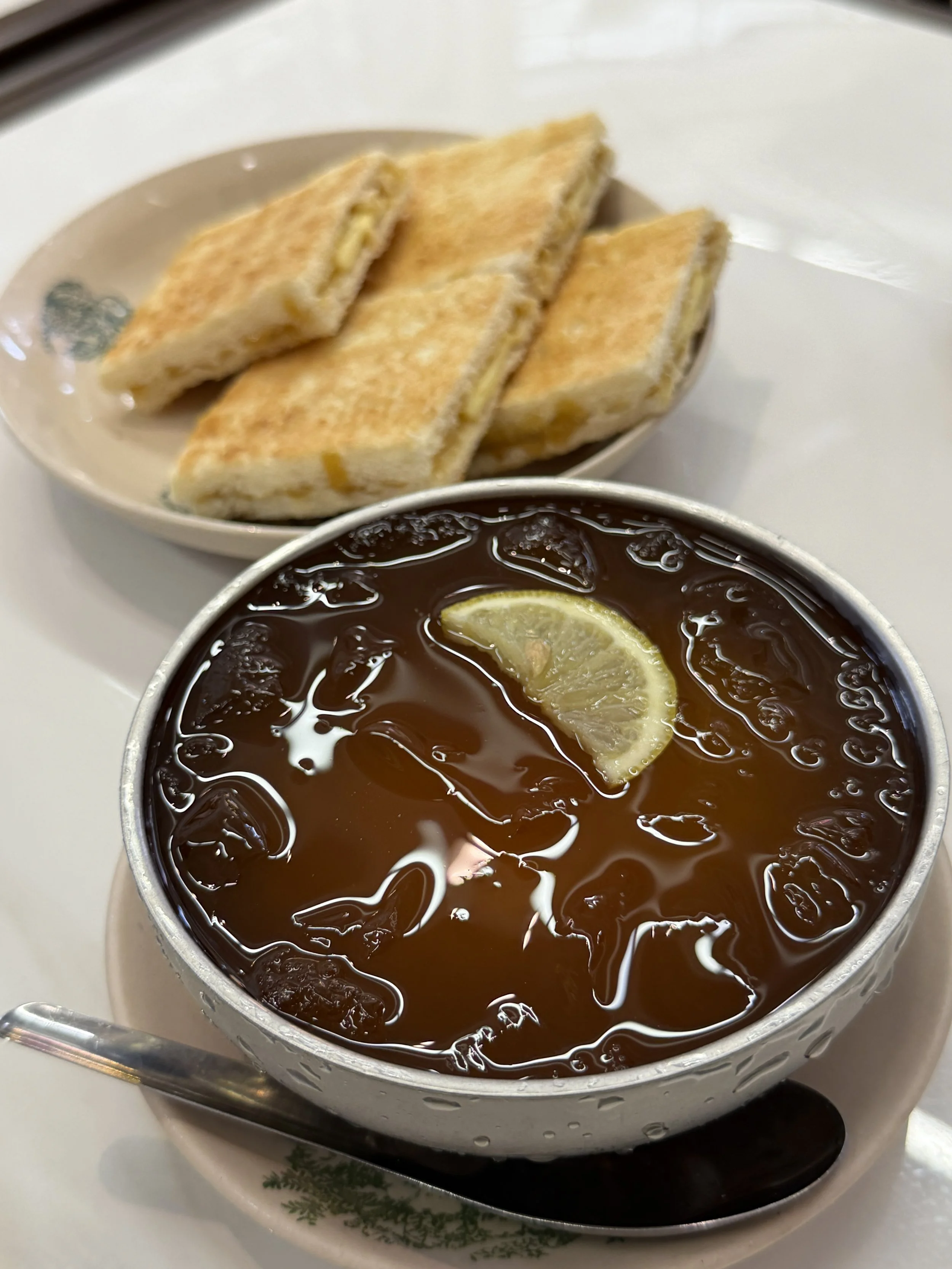
· Yu Ying Ice Jelly Tea and thick slabs of Kaya toast (butter and coconut syrup)
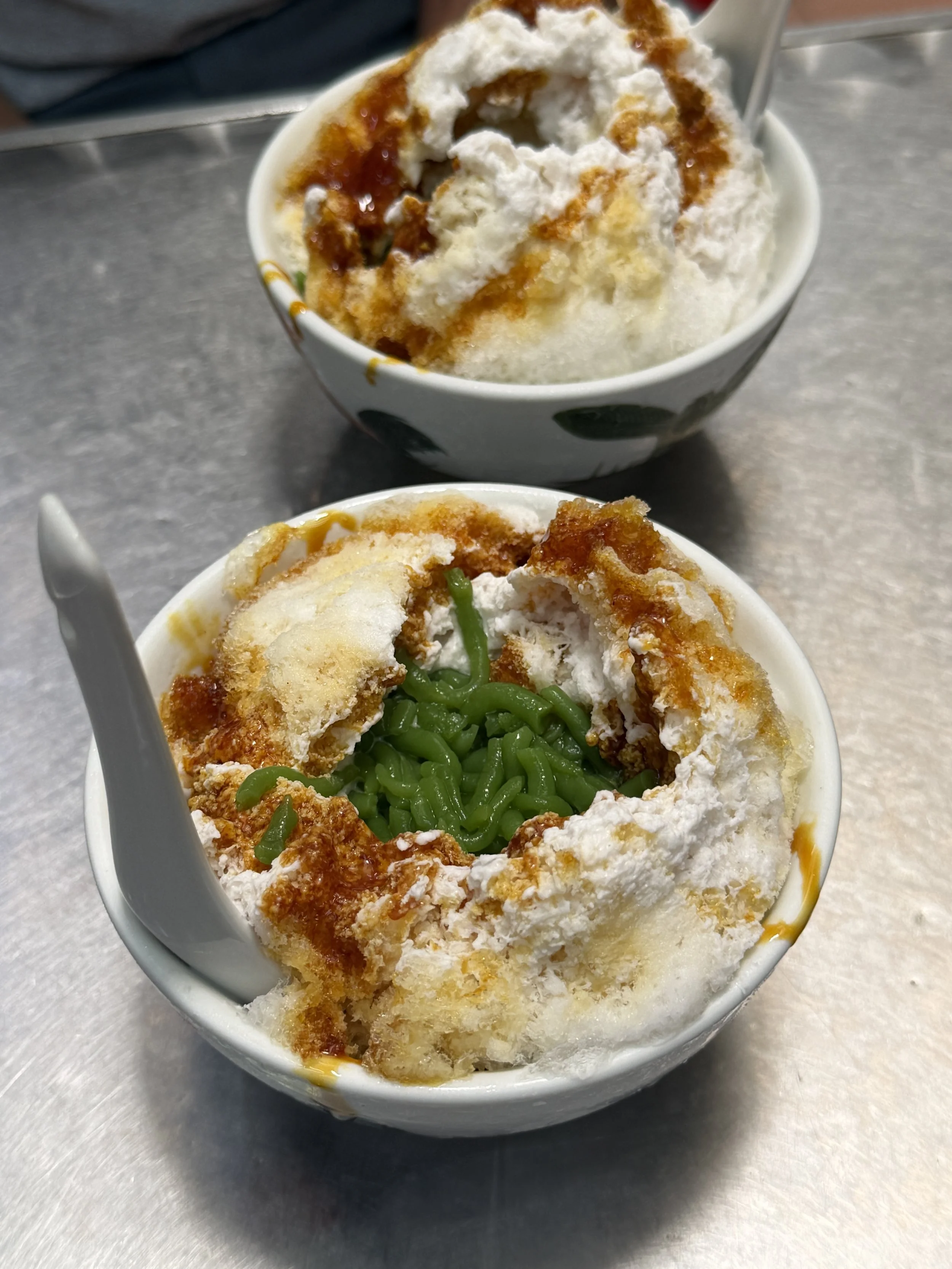
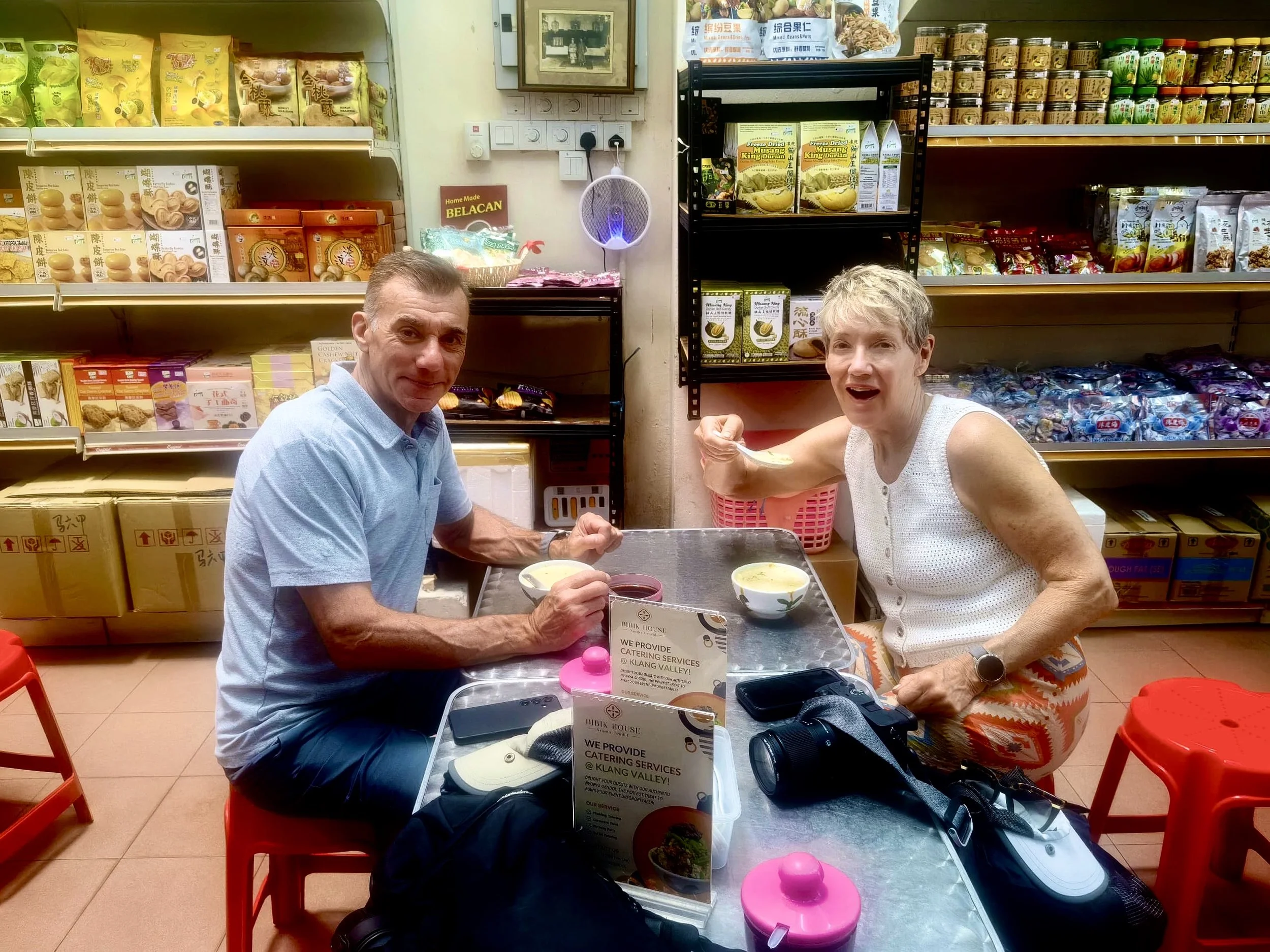
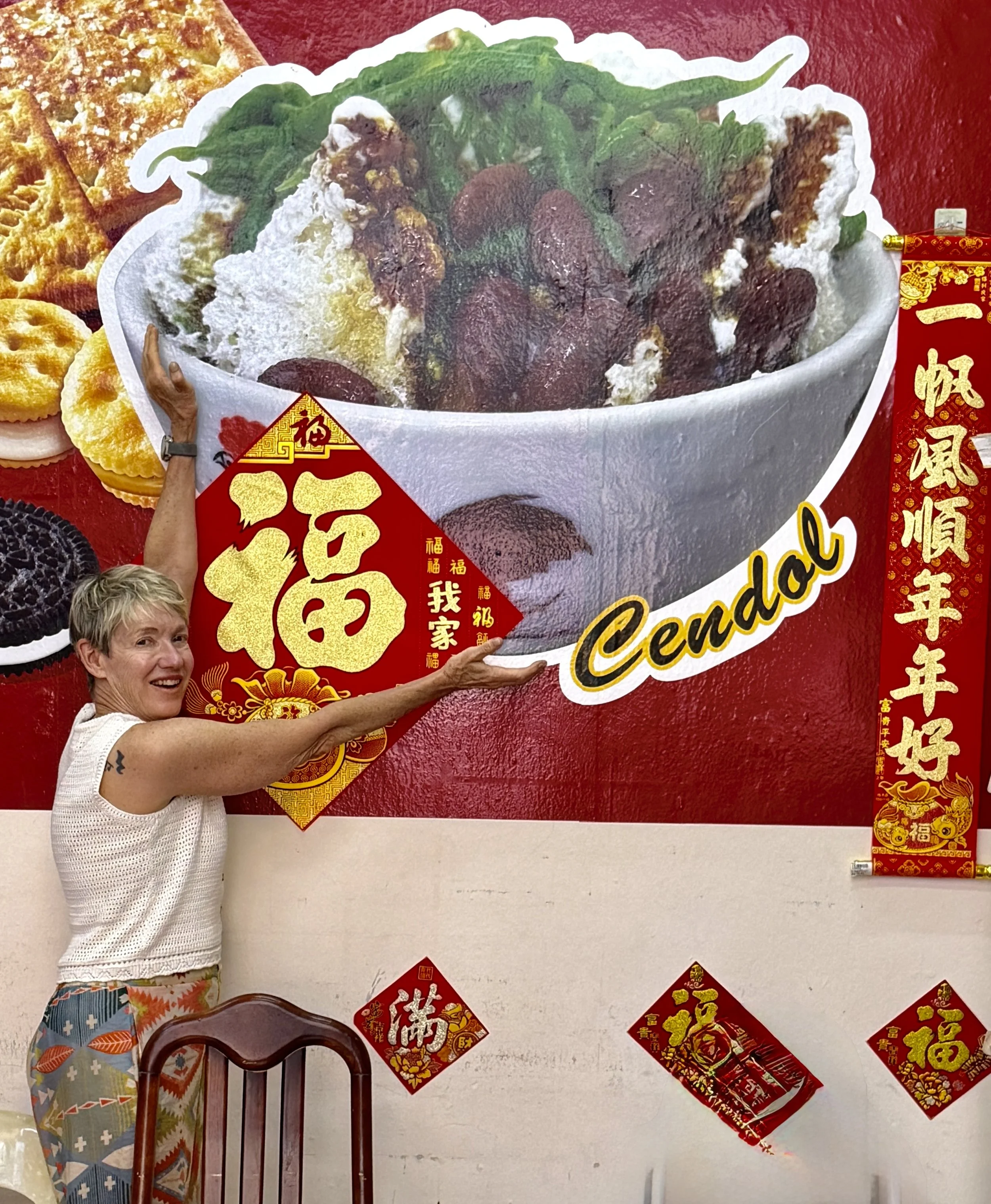
· Nyonya Cendol: coconut milk, rice noodles, red beans, palm sugar syrup — chaos in a bowl, in the best way
· Nasi Lemak: coconut rice with sambal, egg, cucumber — the breakfast of champions
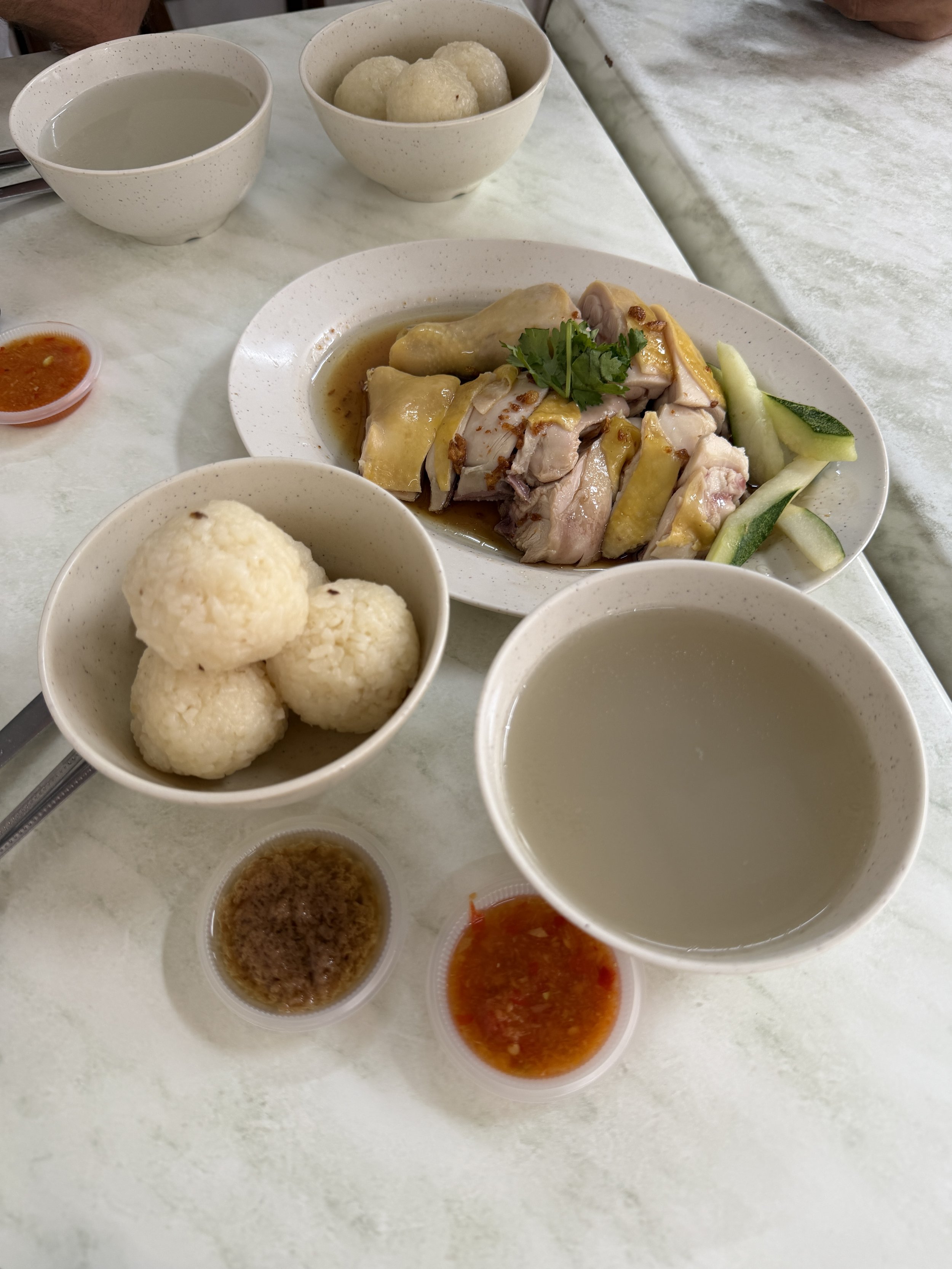
· Chicken rice balls with steamed chicken — Melaka’s most perfectly snackable invention
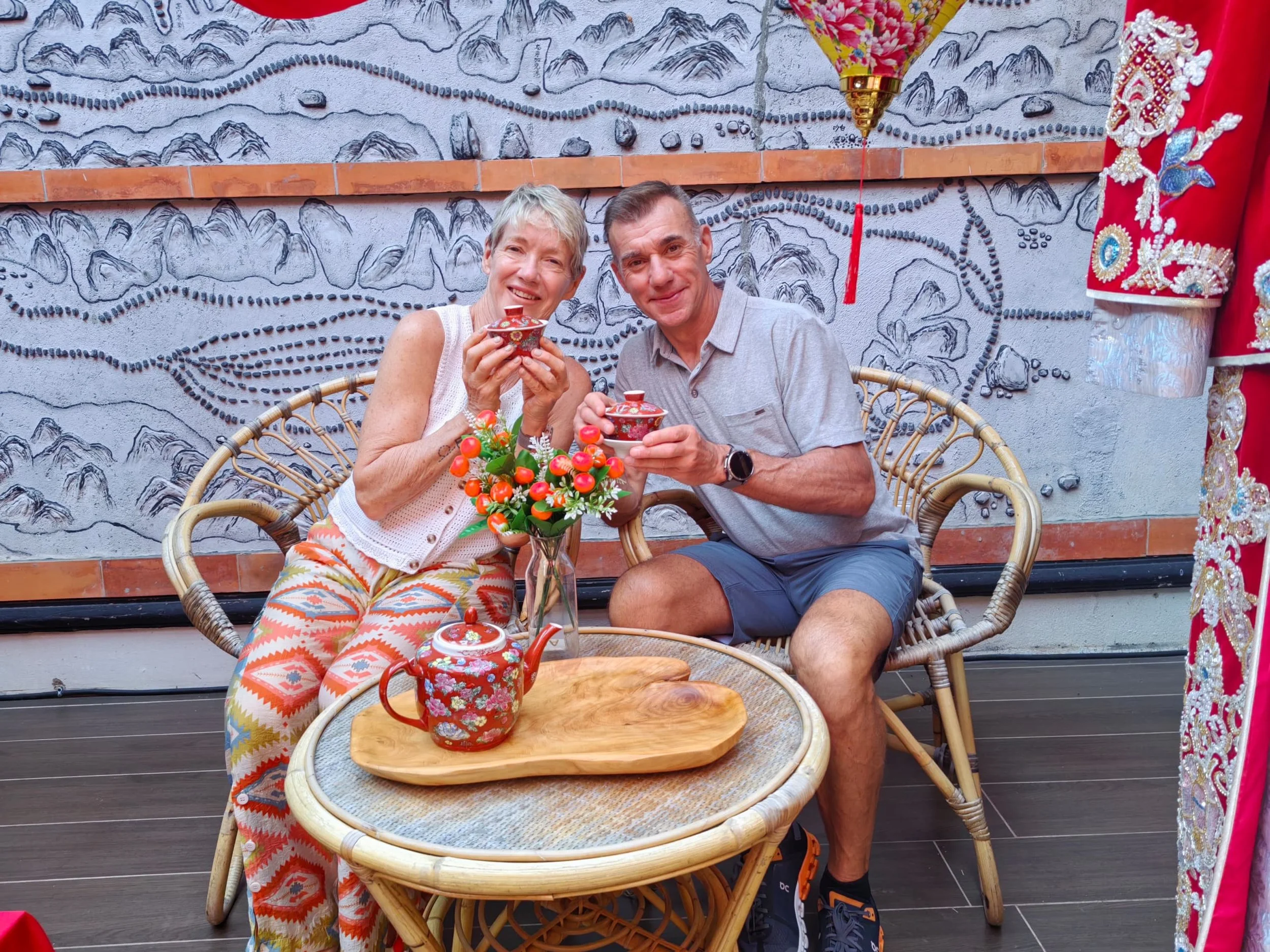
Our tour ends with sweets and selfies back at John’s office. We’ve eaten all morning and somehow feel like we’ve only scratched the surface. In Melaka, you could dine three times a day for a week and never repeat a meal — unless you want to.
It’s a mosaic you don’t just see — you taste it, sip it, and wander through it, one bowl, one alley, one cup of Java at a time. And, in Melaka, they’re extremely proud of it.