
There are a few constants when you travel through Southeast Asia.
Scooters everywhere.
Incredible street food.
Heat and humidity.
And durian.
What’s durian you ask?
It’s a fruit.
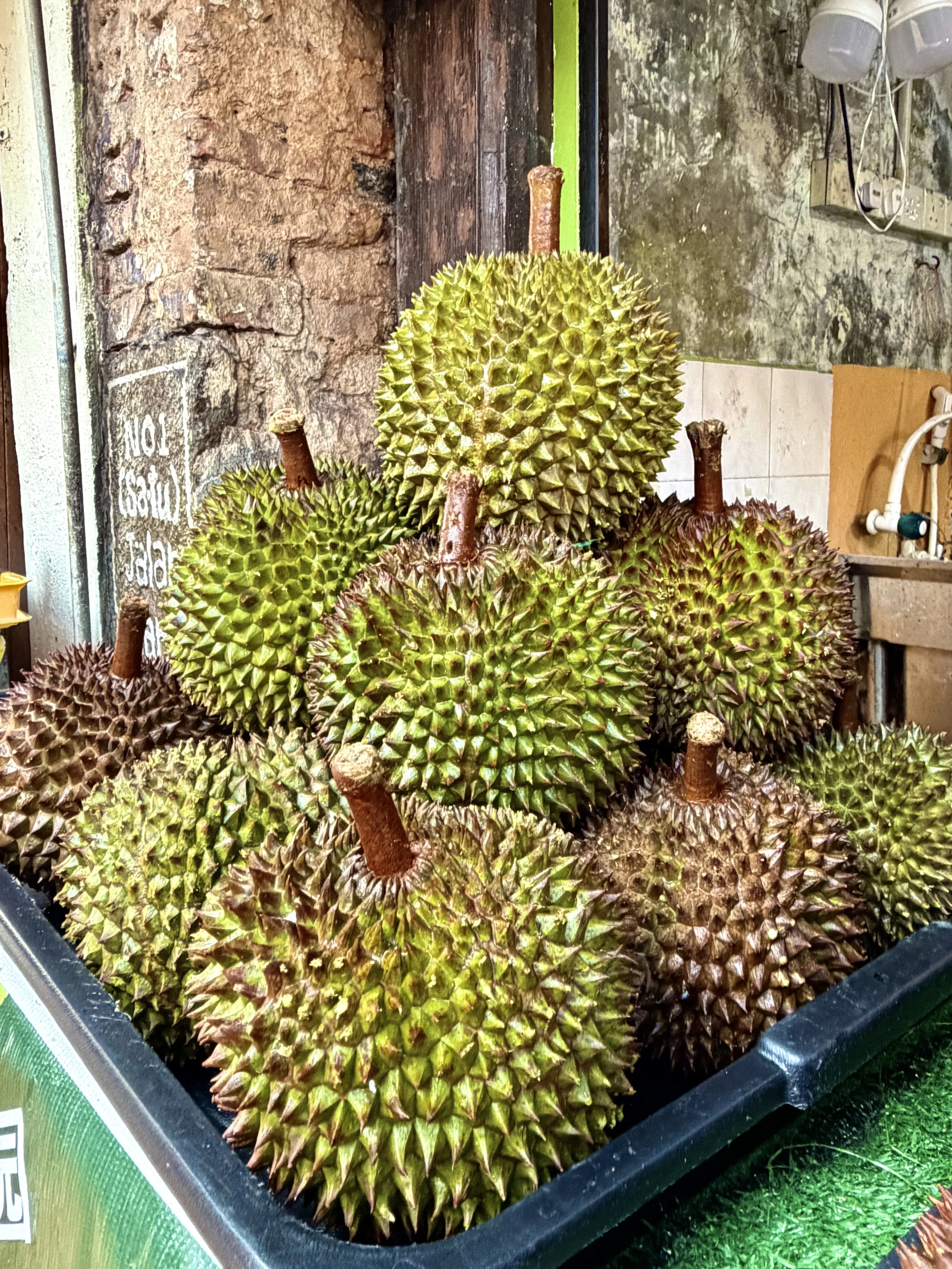
A giant, stinky, fruit.
It grows all over south-east Asia on giant trees with “broccoli-like” tops
But it’s not just a fruit. It’s the king of fruits.
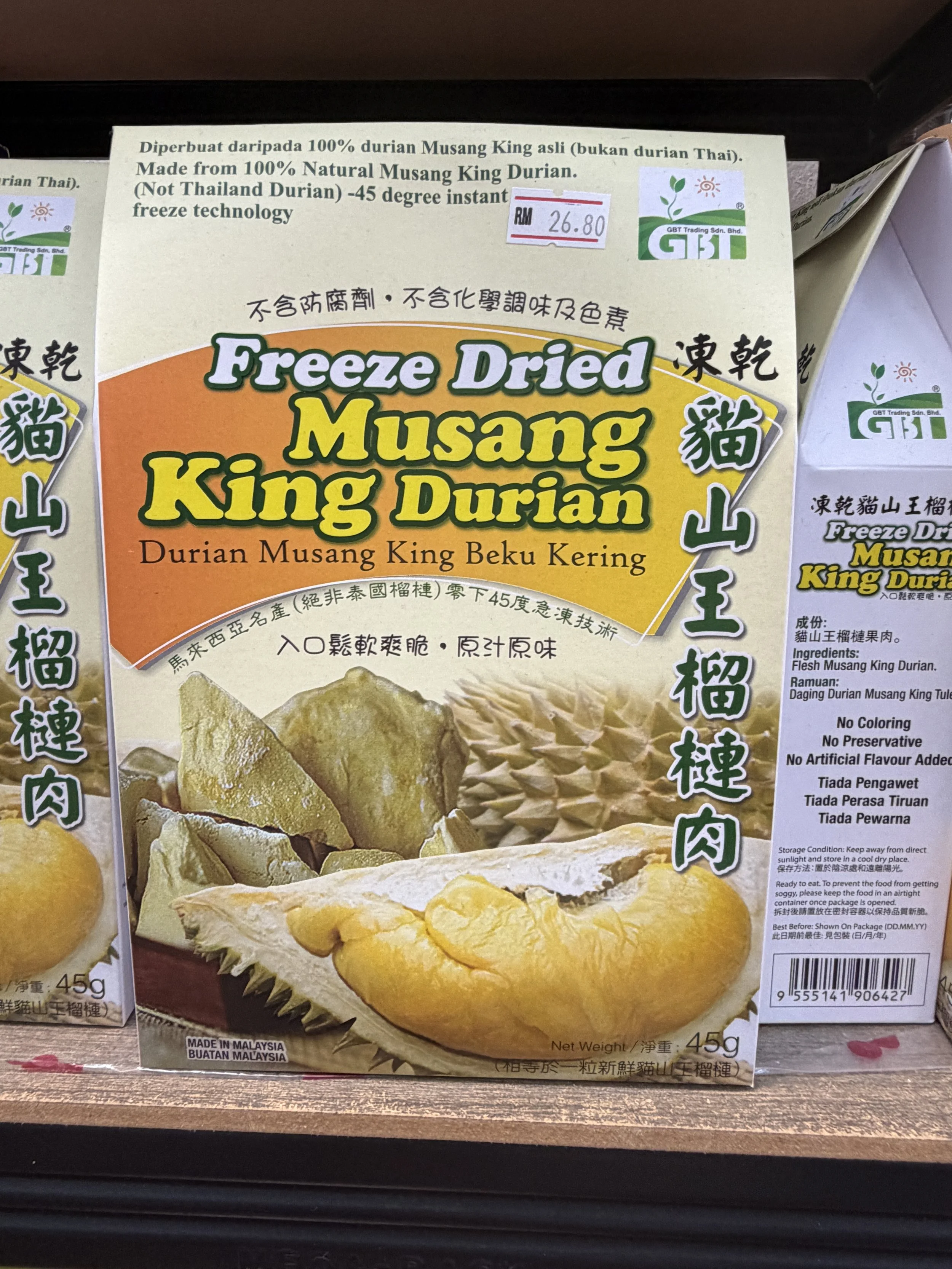
Apparently, there are dozens-if not hundreds-of varieties, each with its own flavour, texture, and fiercely loyal following. Some are even named and graded like fine wine. And yes, one of them is quite literally called “Musang King”.
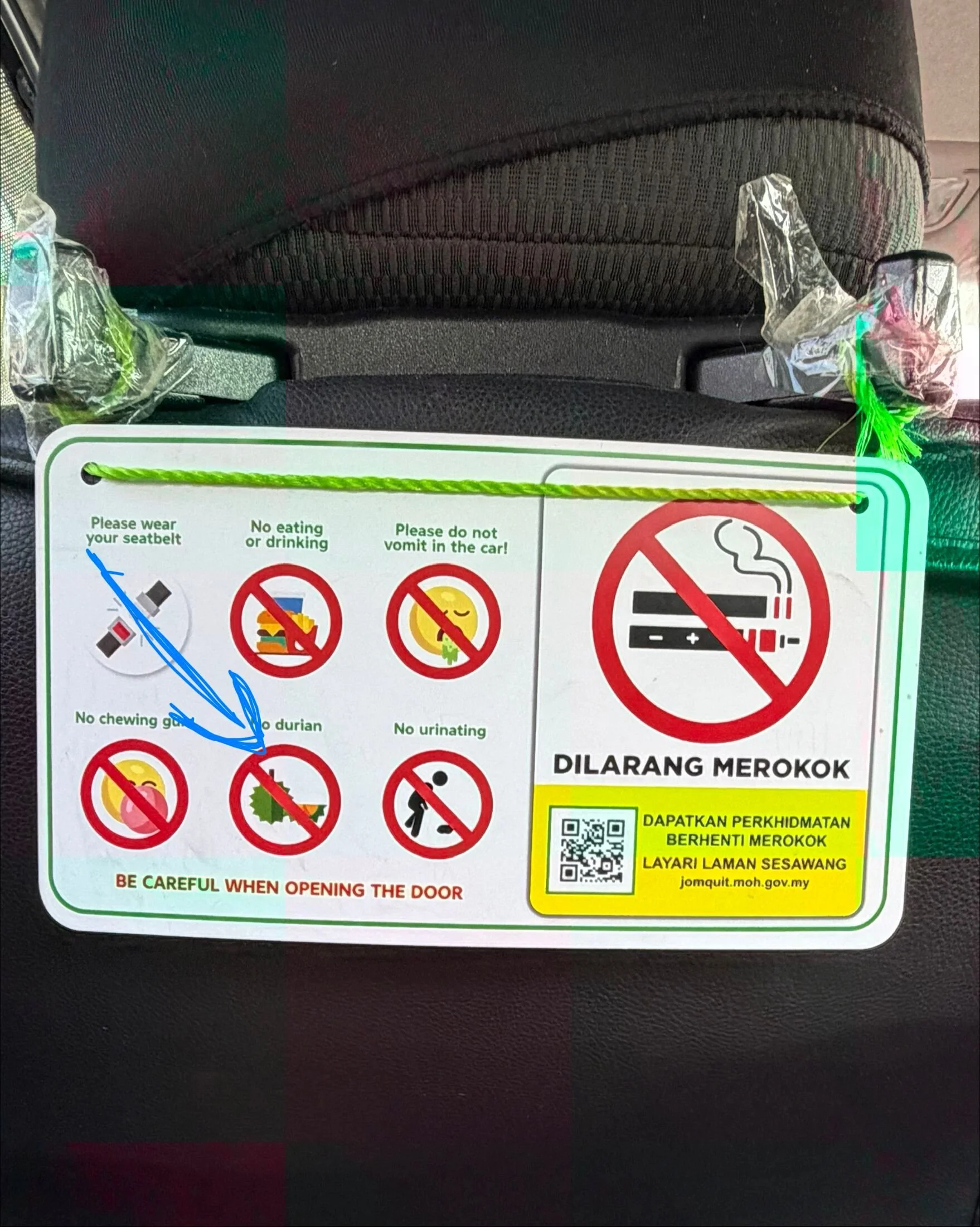
Durian is not subtle. It announces itself long before you see it—it’s that pungent odour drifting through markets, wafting down streets, sneaking into hotel lobbies despite very clear signage begging it not to. There are rules here about durian. No durian in taxis. No durian on buses. No durian on planes. Definitely no durian in hotels.
Which, naturally, made me wonder: how good can something be if it requires this many restrictions?
And yet—everywhere we go—Malaysia, Indonesia, Sri Lanka—the locals love it. Not casually. Passionately. Reverently. This is not just fruit. This is the king of fruits.
This is not casual fruit consumption.
So, of course, I had to try it.
Three times now.
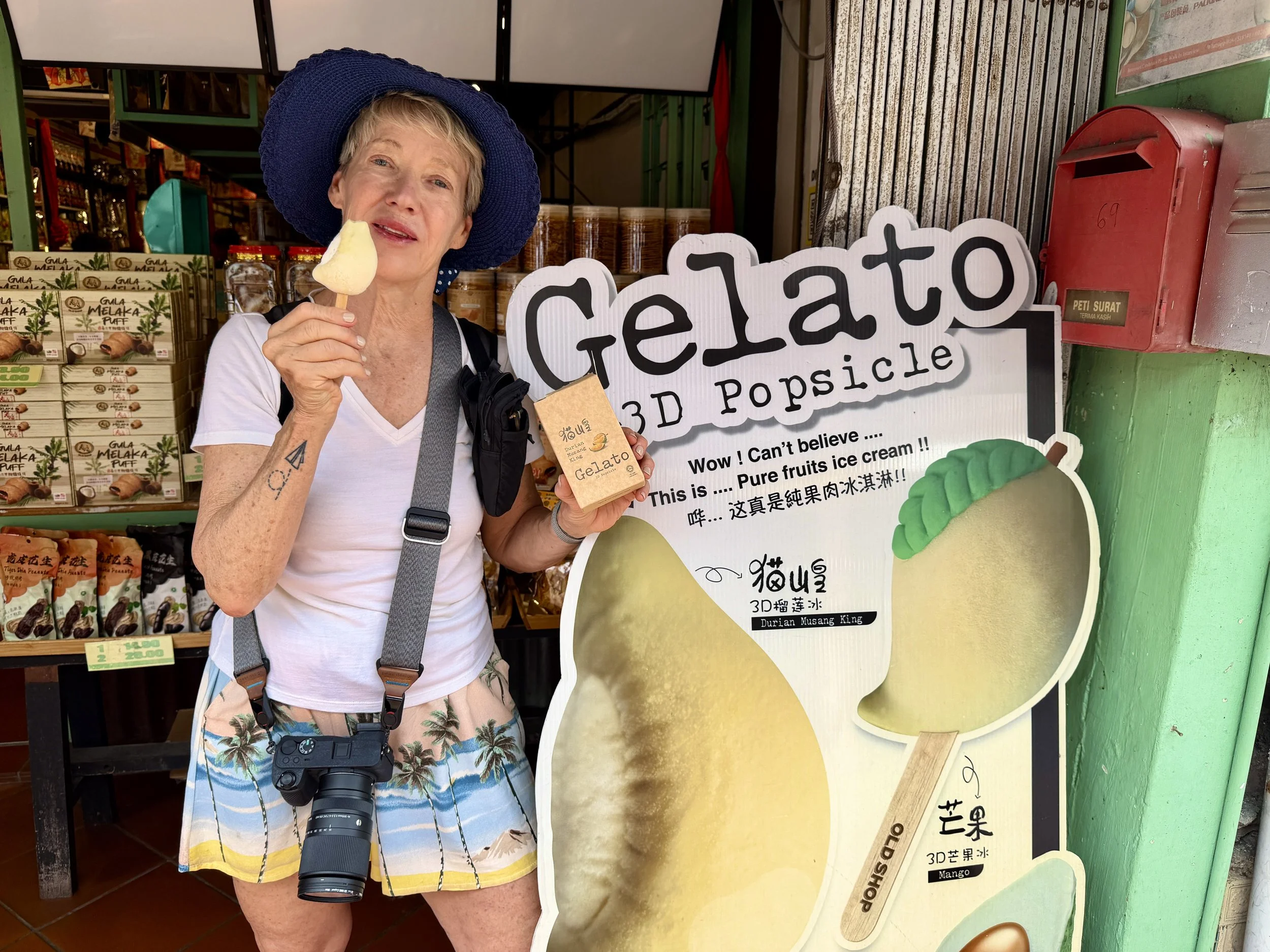
First as ice cream (surely the gateway version).
Then frozen (perhaps toned down?).
And finally, fresh—from a small durian bought by our guide on a food tour.
When we stepped into the durian restaurant I smiled widely and thought, yes, I’ll try it again—with optimism… and just a hint of dread.
Gary, on the other hand, started out as a definite “NO.” It may have been the peer pressure of the food tour group that compelled him to give it a go—but he paid for it, complaining for the rest of the night and into the next morning that he could still taste it every time he burped.
While I was more subtle (and optimistic) in my tasting efforts, each time I’ve tried it, I’ve arrived at the same conclusion:
Why?
The smell hits first. There’s no polite way to describe it. It’s… aggressive. A combination of overripe onions, gym socks, and something vaguely sweet trying very hard to redeem the situation. You know immediately which aisle at the market is the durian aisle—your nose will either pull you toward it or send you scurrying.
Then there’s the texture. Soft. Custardy. Slightly slippery (some of us call it slimy). Mildly offensive on its own—but paired with the smell, it becomes… a lot.
And the taste? This is where things get complicated. Because it’s not actually bad in a simple way. It’s rich. Sweet. Savoury. A bit like custard mixed with caramelized garlic, maybe with a whisper of smelly cheese—or chicken.
It’s confusing. Intriguing, even.
But craveable?
For me, no.
And yet, I keep asking the question: why do people love this so much?
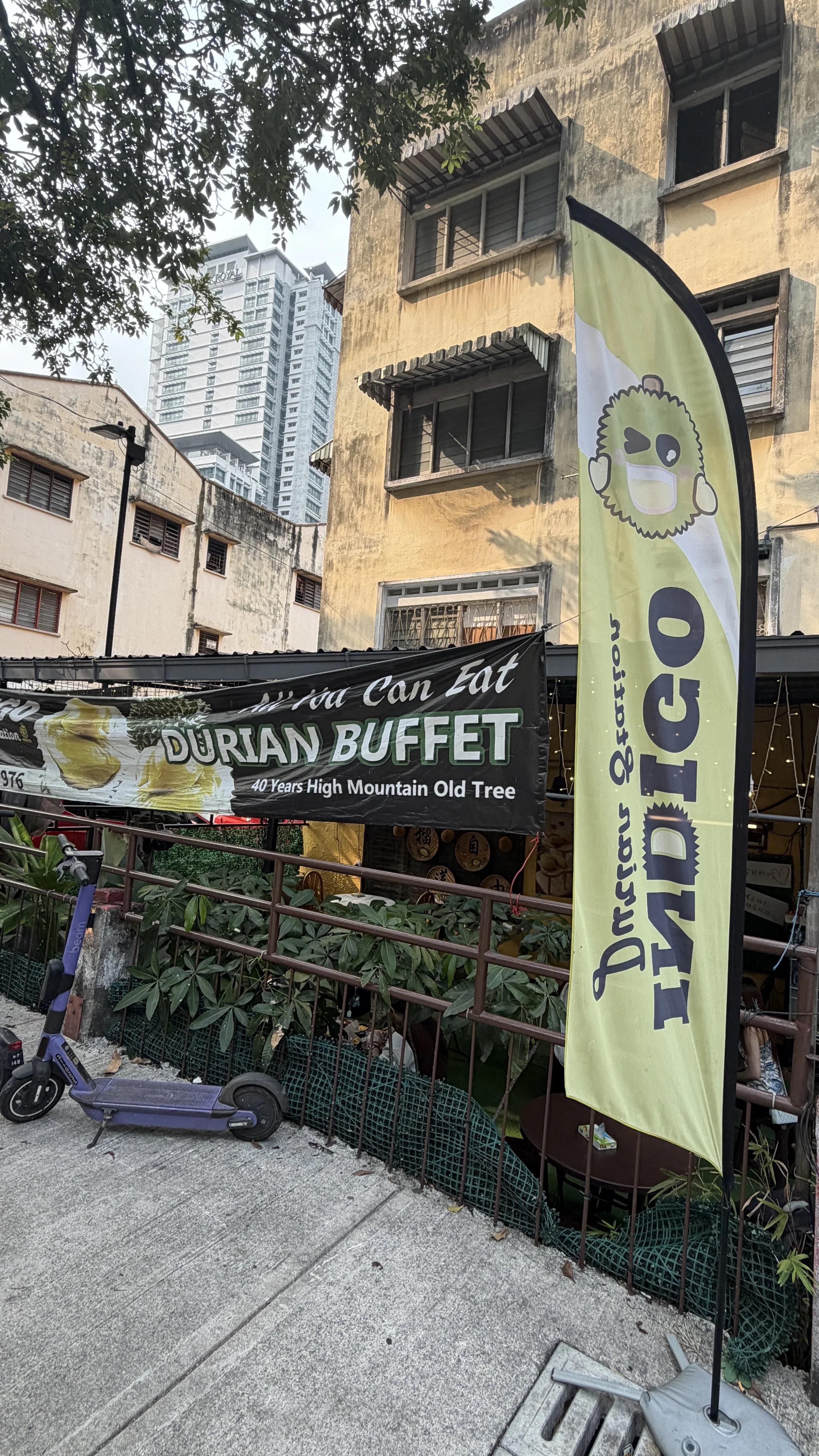
We’re in Kuala Lumpur at the moment, and there are durian restaurants everywhere. Yes—restaurants dedicated entirely to this giant, stinky fruit.
Actual places where people go, where the main food group is durian.
In fact, there are even “all-you-can-eat” durian restaurants, as well as entire “durian streets.” One young woman explained it this way: “You know how you might ask someone if they want to go out for a beer? Well, here we ask if they want to go out for durian.”
It’s social. It’s fun.
Really?
I feel like a more accurate comparison would be asking someone if they want to meet up and chew on some smelly socks for a while.
But who am I to judge—I love stinky blue cheeses and Brussels sprouts and would gladly meet up with a friend to enjoy either.
The more I observe the durian passion around me, the more certain I am that the answer isn’t just about taste.
The young woman may have a point.
Durian is seasonal—in Kuala Lumpur, typically June to August (though it seems to have started early this year). It’s social. It’s something people gather around—buying a whole fruit, cracking it open, sharing it piece by piece. There’s anticipation, debate over which variety is best, pride in knowing a good one from a bad one.
On our food tour, I watched a couple share two full durians. Yes, they were making a video for social media—but they were also clearly enjoying it. They told me they hoped their video would encourage others to try durian.
I wished them luck… and quietly hoped their livelihoods didn’t depend on it.
But there’s no doubting that durian is an experience unto itself.
And maybe that’s the point.
Because yes—Southeast Asia is full of fruits that are easy to love. Mangoes that melt in your mouth. Pineapple that tastes like sunshine. Rambutan, mangosteen, longan, papaya… all sweet, fragrant, and immediately appealing.
Durian doesn’t try to be any of that.
It’s bold. Divisive. A little bit ridiculous.
And yet, somehow, deeply beloved.
Will I try it again?
Hmmmm… the jury’s still out on that one.
Will I suddenly fall in love with it?
Unlikely.
But I’m starting to understand that durian isn’t really about first impressions.
It’s about curiosity.
It’s about culture.
And maybe—just maybe—it’s about learning to appreciate something that doesn’t make sense at first bite.
Or second. Or third.
Or perhaps… ever.
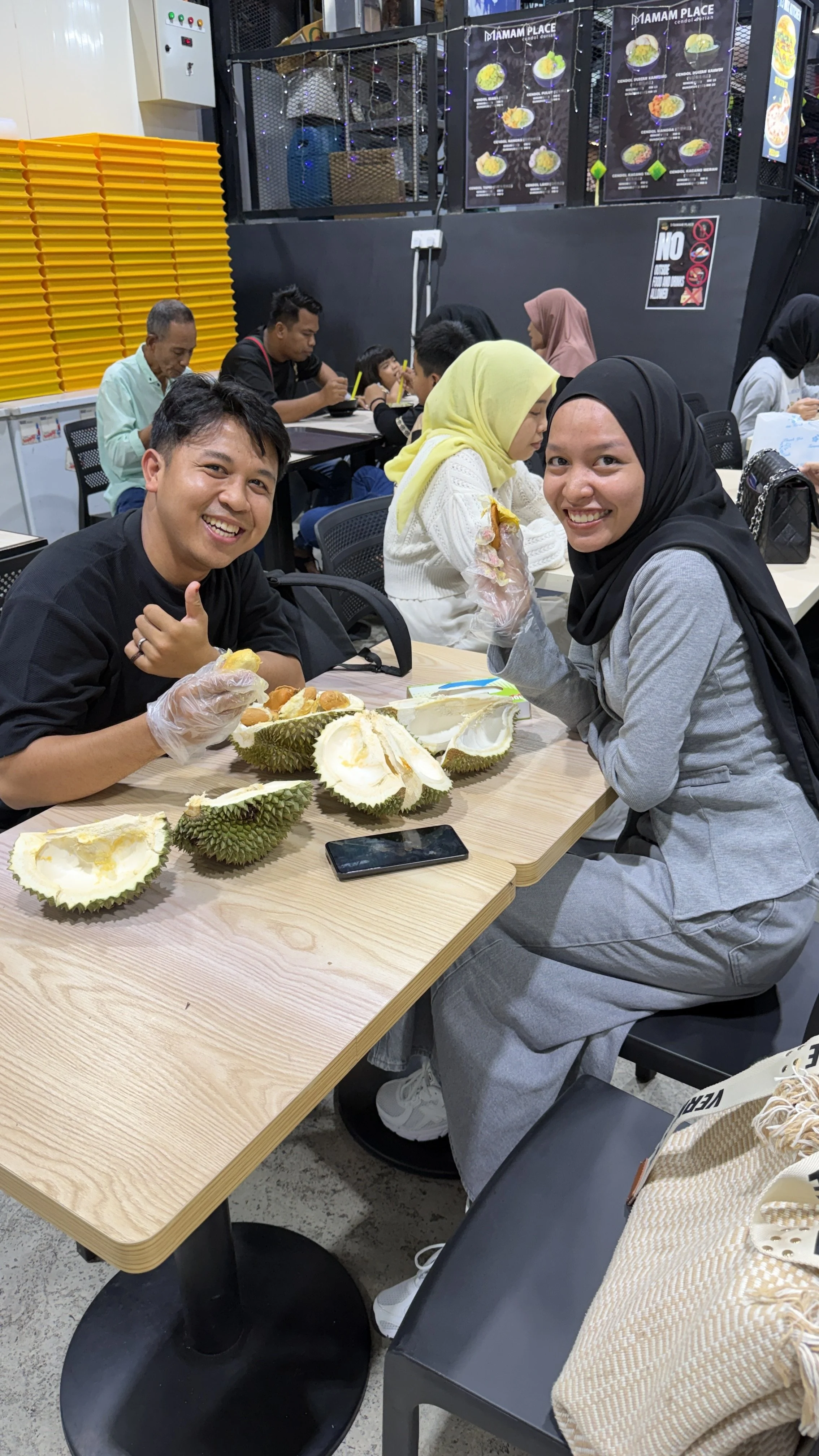
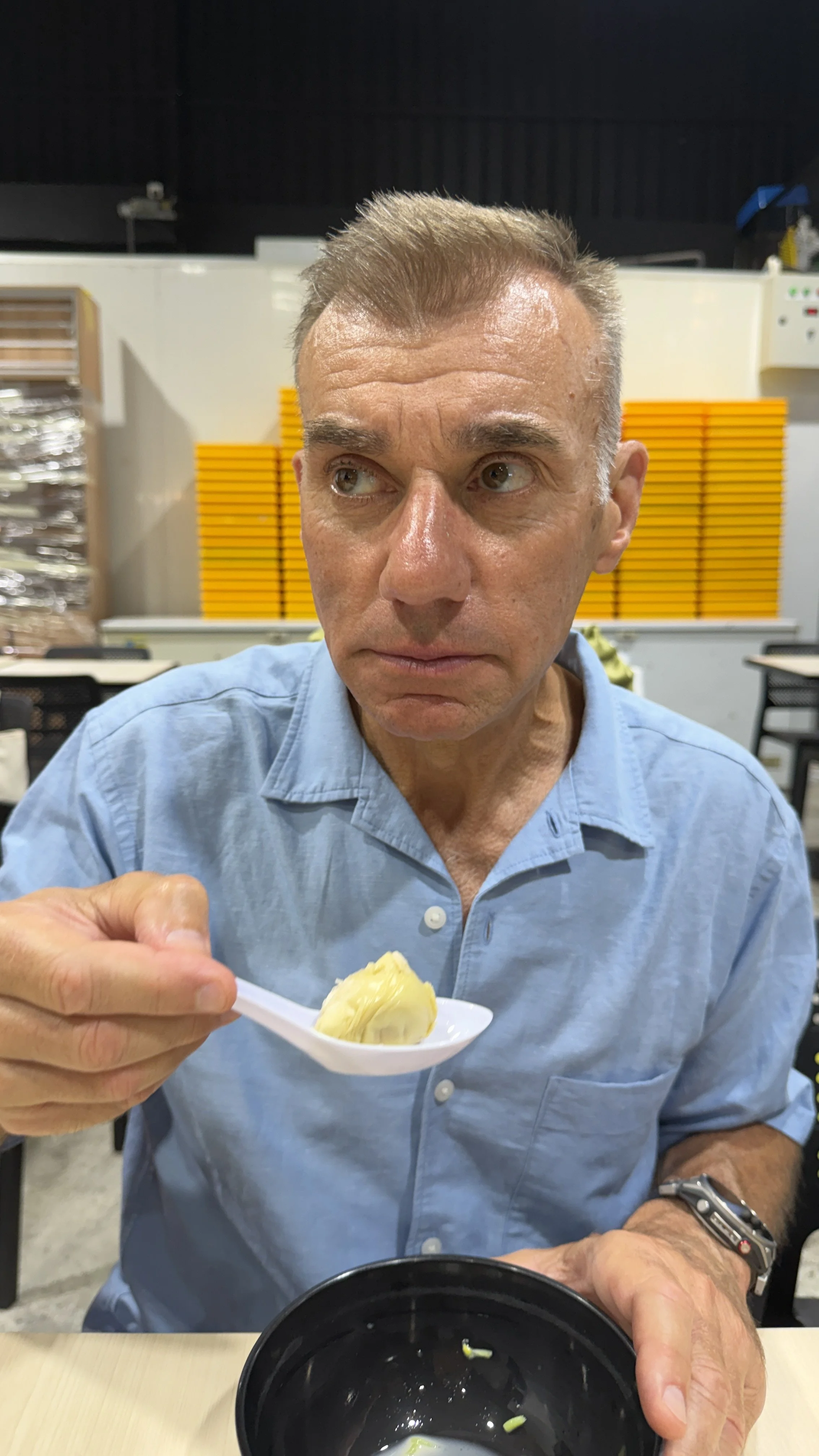
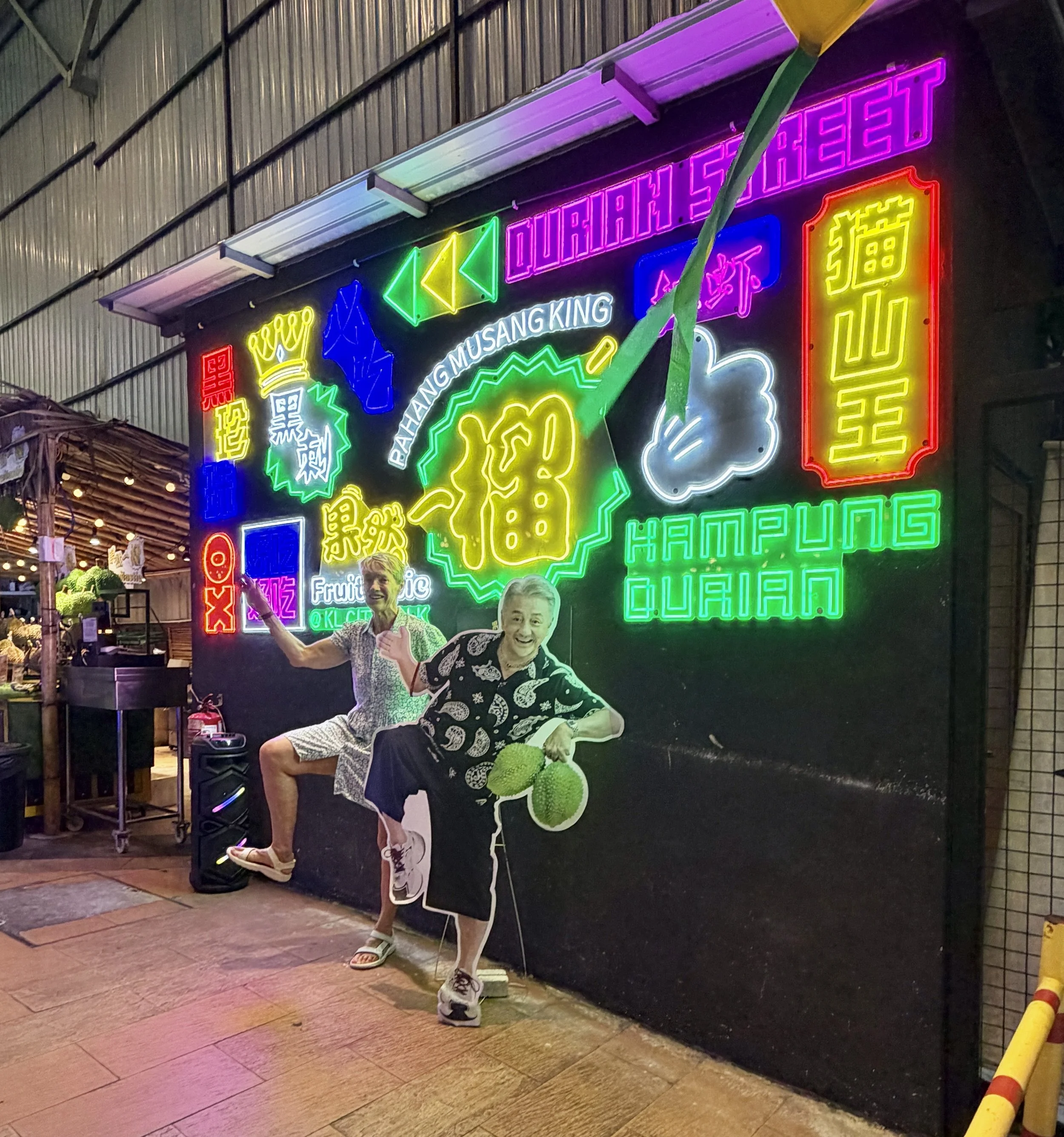
Durian effort #3 - on our Chef’s Food Tour in Kuala Lumpur.
Gary was the first brave soul to give it a go. He paid for it later.