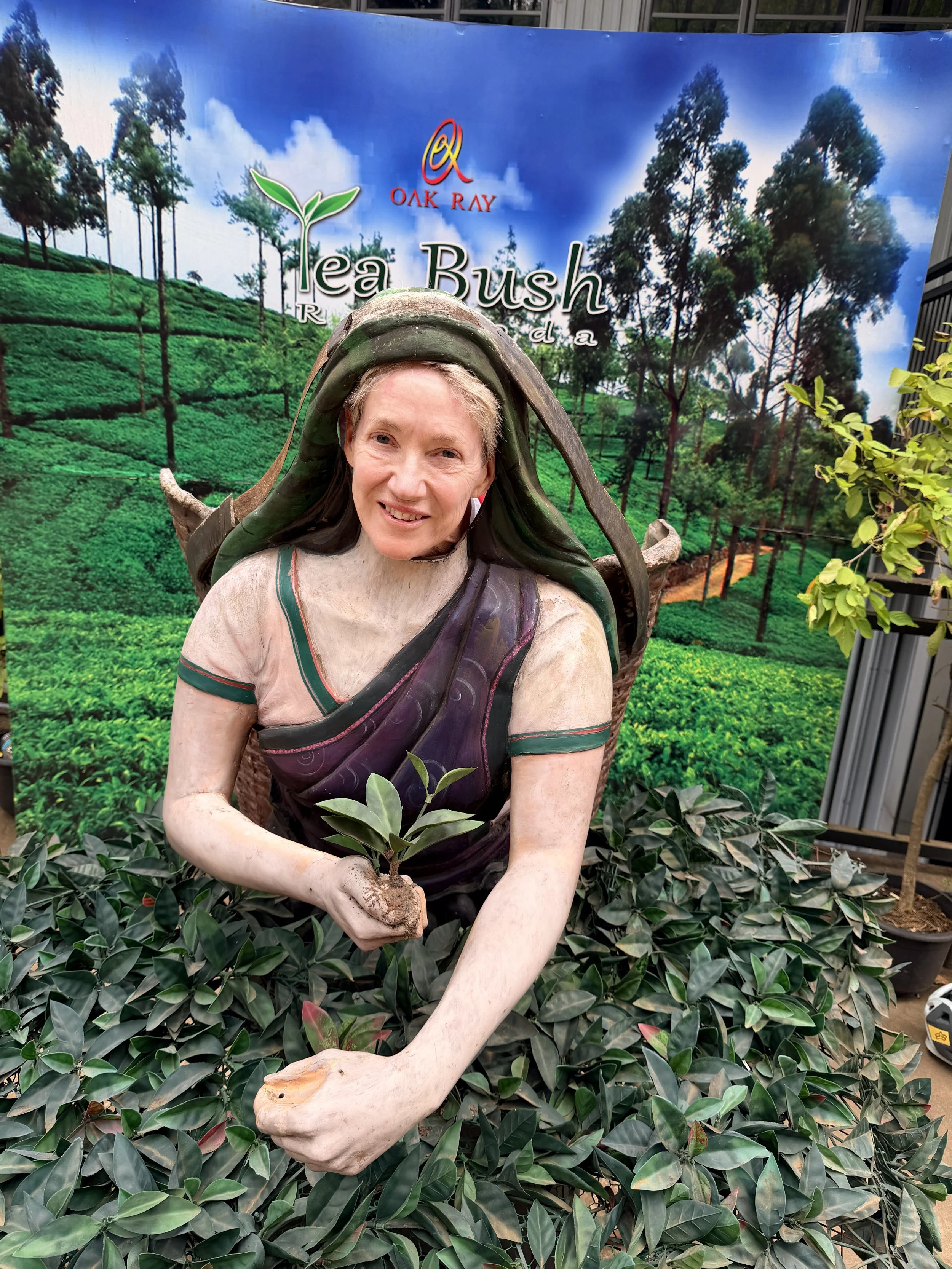
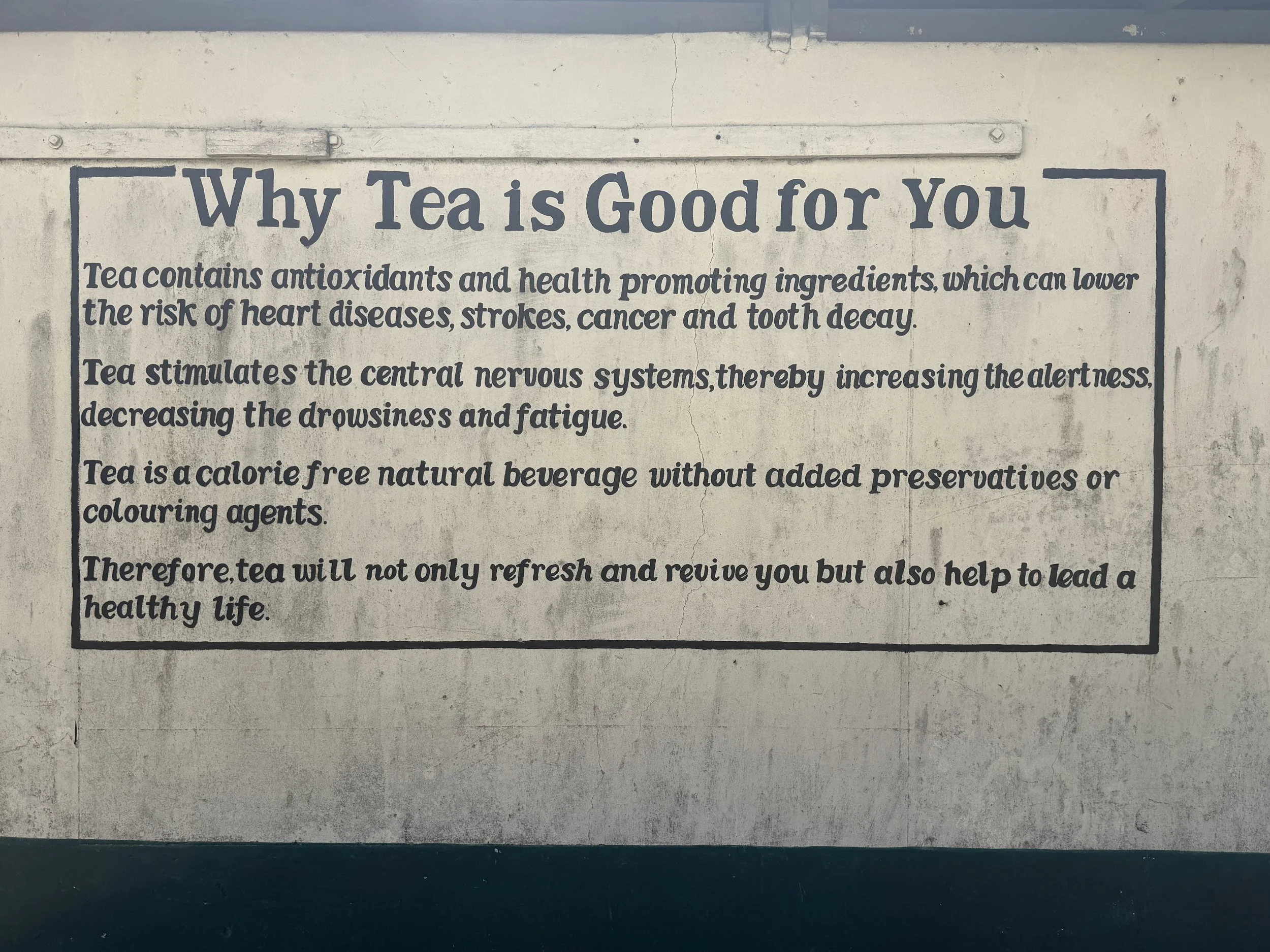
I hadn’t planned to write a blog post about tea in Sri Lanka. But after two weeks with Brits who treat teatime as a constitutional right — and after a harrowing (and, I admit, slightly exhilarating) drive through vertiginous tea plantations where death felt like a plausible outcome at every hairpin turn — I feel compelled to share.
First, for the data lovers (feel free to skip ahead if you’re here for drama rather than digits):
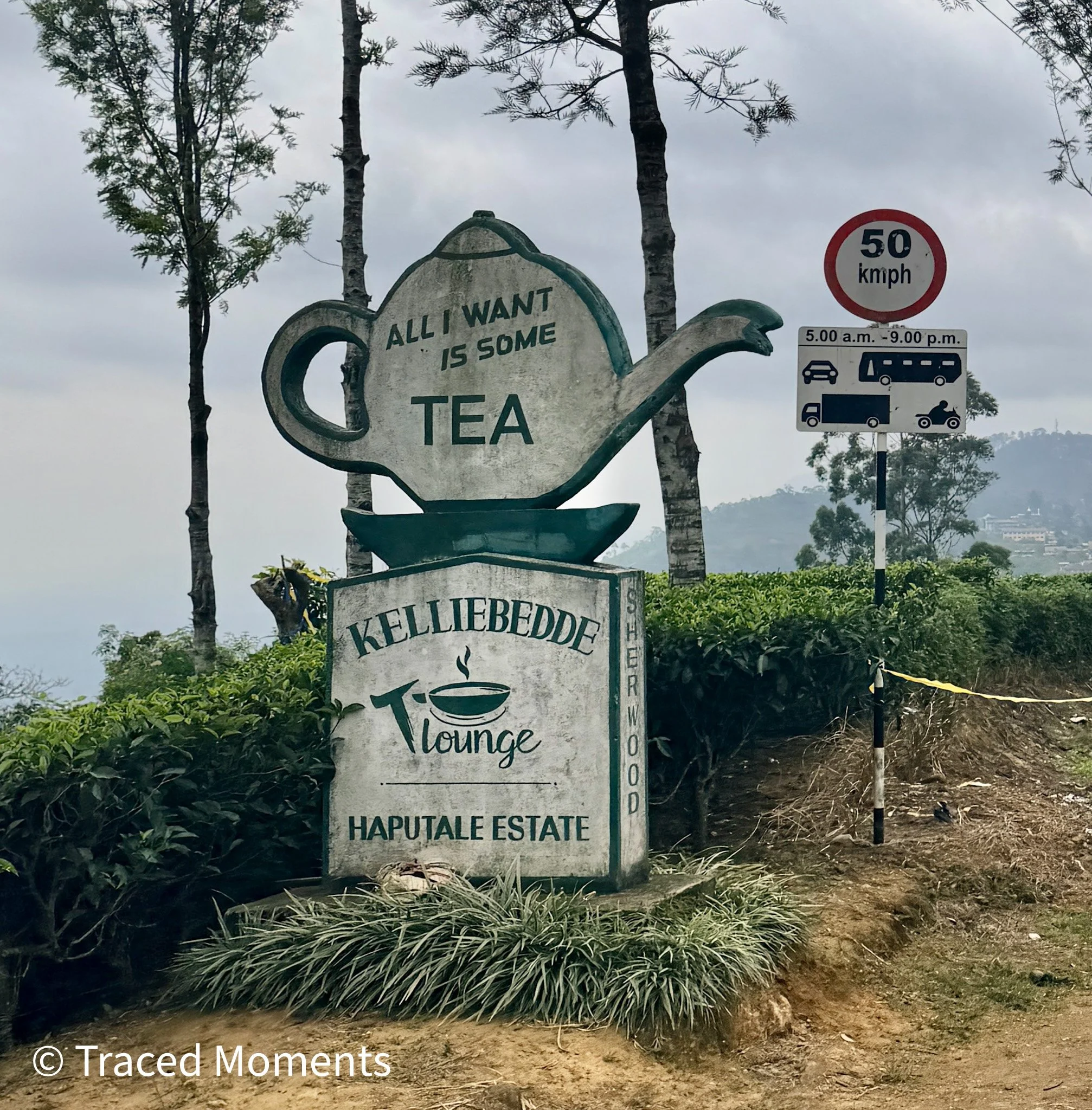
Sri Lankan tea was born of catastrophe. When coffee plantations were wiped out by blight in the 1860s, a determined Scotsman named James Taylor (no relation to the singer) planted a few hopeful acres near Kandy and quietly changed the island’s future.
Today, roughly 400,000 acres of tea blanket the central highlands and southern slopes — from the cool, floral gardens of Nuwara Eliya to the brisk elevations of UVA and the classic estates of Dimbula. More than 400,000 smallholders now produce about 70% of the crop, most farming less than two hectares. The leaves they grow are sold to local leaf processors who, in turn, sell the tea at the Central Tea Auction. Numerous, larger, historical tea estates grow and produce their own tea - think of them as the small wineries. These plantations still tend to sport names that harken to the days of colonial rule, like Kelliebeddie, Edinburgh, Dambatenne. and Halyley’s. Large production companies are now owned by Sri Lankans or, in part by the government. Over 90% of Sri Lankan tea is exported, generating more than US$1 billion annually and supporting the livelihoods of over a million people.
“Ceylon Tea” isn’t just a drink — it’s a landscape, an economy, and a national identity poured into one perfectly brewed cup. (Canadians: look for pure Ceylon from producers like Dilmah or Basilur).
So… those are the facts. Now for the stories.
Tea here is grown on slopes that appear to defy both gravity and common sense — often 30–45 degrees, sometimes steeper — requiring careful terracing and meticulous hand-plucking. The women who do this work spend long days on these inclines for modest pay. It is as humbling as it is beautiful.
We cycled from Kandy toward Nuwara Eliya through terrain that had been devastated by the November 2025 landslides. Our original route was gone. Instead, we climbed via a tiny local road that wound directly through the plantations. Riding “with” the tea — eye level with the women picking leaves — was extraordinary. I stopped to chat with a few as I slowly inched uphill, breathless for multiple reasons.
In Nuwara Eliya we toured the historic Pedro Tea Estate, opened in the 1870s. Inside the vast factory we followed the leaves’ journey: weighing, withering, rolling, pressing, cutting, grading — until finally, the finished product was ready to be shipped across the globe. Tea here is produced year-round. It’s both agricultural poetry and industrial efficiency.
Back again in the highlands — this time sensibly by van with Danica and Lahiru — we visited Dambatenne Tea Estate, established in 1890 by Thomas Lipton, the man who cut out middlemen and brought tea directly to British households. Yes, that Lipton.
Our mission: Lipton’s Seat, the legendary perch where Lipton supposedly surveyed his empire — perhaps contemplating global domination, or at least a strong afternoon blend.
The viewpoint is spectacular. The drive to reach it is not for the faint of heart.
The road climbs skyward along knife-edge ridges, no guardrails, sheer drops, narrow enough that when two vehicles meet, one must reverse until a sliver of shoulder appears as a safe haven. And then there are the red buses — those fearless, horn-blaring monarchs of Sri Lanka — who approach hairpin turns as though physics were merely a suggestion. What felt like 100 kilometres of this craziness was, in reality, only about eight kilometres.
I had not realized this was the road when I chose the passenger seat.
But there I was.
I tried to sit quietly and calmly, gazing into the lush green abyss outside my window, determined not to audibly gasp every time our “lane” narrowed to something roughly the width of a yoga mat. Unfortunately, I failed.
Whenever we edged into one of those microscopic pull-offs — the kind where my side of the van appeared to be hovering optimistically over open air — I may have emitted sounds not unlike a teakettle reaching boil.
From the back seat came what I can only describe as family solidarity in the form of eye-rolling and laughter. (Did they genuinely believe the rear seats were somehow equipped with parachutes?) At one point I found myself leaning dramatically toward Ruwan, our driver, as though shifting my body weight 12 inches right (almost into his lap) would materially improve our survival odds. It happened so often that Ruwan joined the family chuckles and eye rolling at my antics.
Even more humiliating: Ruwan repeatedly had to ask me to lift my head from between my knees because I was blocking his tiny front corner mirror — apparently a key visual tool in preventing us from becoming a cautionary tale. The drive lasted forever. I am certain of it. Geological time passed.
And yet — as we crept upward — I kept thinking about the women we had seen earlier in the plantations.
How do they pick tea on those slopes?
With a sack slung from their foreheads and down their backs, they pluck up to 80 kilograms of leaves a day. Twenty kilograms per bag. Then, after climbing up or down gradients that make one of my Peloton hill rides look like an easy warm-up, they wait along narrow stretches of pavement for buses or worker trucks to take them to the factory. And they do all of this with an air of complete nonchalance.
Meanwhile, I was incapacitated by a passenger seat.
When we finally arrived at Lipton’s Seat, it was — mercifully — magnificent. The panoramic view spills across endless waves of green. A statue of Thomas Lipton sits serenely on a bench, eternally surveying his empire, looking entirely unbothered by the road required to reach it.
Naturally, there is tea available at the top. Of course there is.
Was the drive worth it?
Yes.
Oddly, the trip back down was perfectly fine. Perhaps I had exhausted my daily embarrassment quota. Or perhaps I finally trusted that Ruwan — calm, steady, unflappable Ruwan — had this under control all along. It may also have helped that we encountered only tuk tuks on the descent. No red diesel-spewing mountain monarchs asserting dominance at hairpin turns (that topic’s for another day).
In any case, I believe I have earned a proper cuppa’. My new friends from the UK would be proud.
Enjoy the photos below and in the Collected Moments gallery of our varied tea experiences.